
Variegato Di Castelfranco
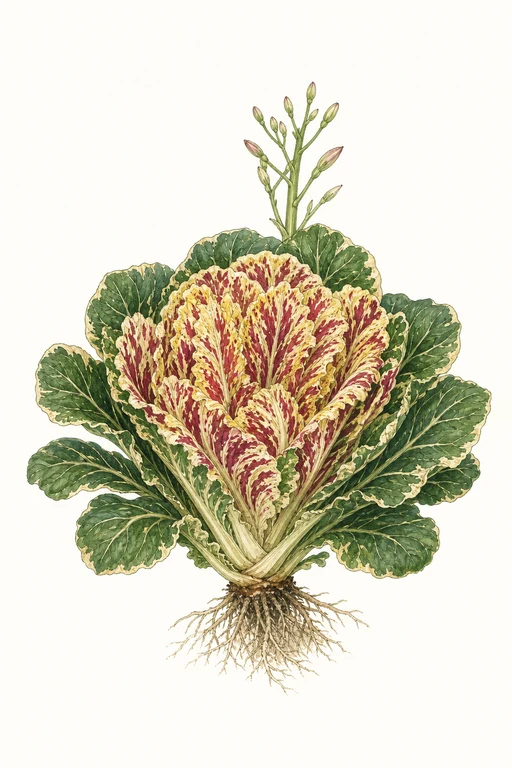
Crisp, luminous hearts unfurl with a painterly variegation—creamy ivory to pale butter-yellow brushed through with deep rose-burgundy and cool green.
Variegato Di Castelfranco forms tight, compact rosettes with a satisfyingly snappy bite and a gently sweet, pleasantly bitter edge that lingers like fine radicchio. Grow it for striking fresh salads and elegant braising, or let its bold color shine in composed platters and pickled accents.
Light: Full SunMaturity: 60 DaysHabit: Rosette
Planting schedules and alerts are optimized for Columbus (Zone 6b).
Crop Dates
| Milestone | Date |
|---|---|
| Start Indoors | Direct Sow |
| Last Frost | Apr 25th |
| Transplant / Sow Outdoors | Apr 25th |
| Harvest Begins | Jun 24th |
| Harvest Ends | Oct 16th |
Crop Details
| Trait | Value |
|---|---|
| Days to Maturity | 60 |
| Sun Requirements | Full Sun |
| Growth Habit | Rosette |
| Support Needed | None |
| Planting Depth | Normal |
| Germination Temp (°F) | 45 |
| Min Soil Temp (°F) | 40 |
| Min Night Temp (°F) | 28 |
| Harden Off (days) | Not Required |
Culinary Notes

Chef's Note
Variegato Di Castelfranco is a radicchio that stays crisp—use it raw when you want that snappy, snubber-bitter bite, or braise only until tender at the ribs so it doesn’t collapse. Its creamy ivory tones and cool, sweet-bitter flavor are made for bright acid and nutty, aged dairy.

Best Uses
- shaved raw salad where it keeps its crisp bite under a light vinaigrette
- pan-braised wedges to mellow bitterness while staying structured
- grilled or roasted hearts for char-sweet contrast
- composed platters where the ivory-burgundy color reads like edible artwork

Flavor Profile

Kitchen Pairings
Frequently Asked Questions
What pest or disease commonly affects Cichorium intybus (Variegato di Castelfranco), and how can I treat it?
How often should I water Cichorium intybus during the main growing phase?
How do I know when Cichorium intybus (Variegato di Castelfranco) is ready to harvest?
Sowing Tips

Transplant Conditions
Wait until soil reaches 40°F and nights stay above 28°F before moving outdoors.
Expert Note

Radicchio is best treated like other cool-season leafy greens: sow early, keep soil evenly moist, and let a light frost sweeten the flavor.