
Vates
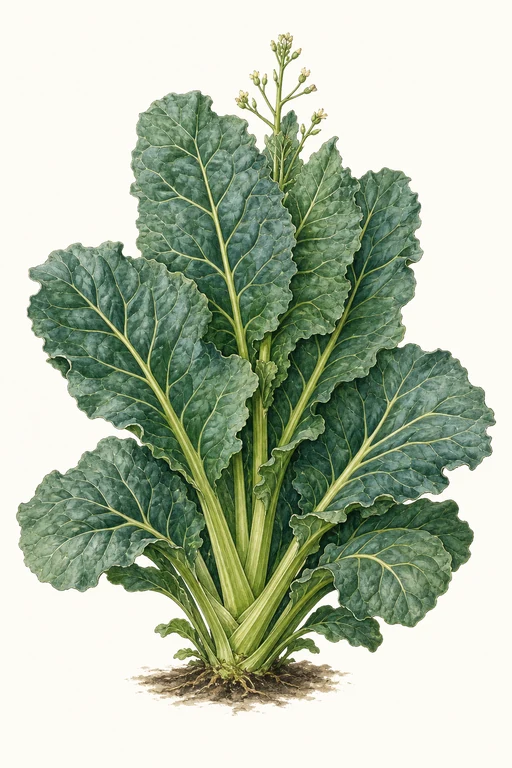
Sink your spoon into the deep, velvety leaves of Vates collard—cool-toned and richly flavored, with a tender bite that turns especially satisfying as the weather cools.
The foliage forms sturdy, upright heads of broad, blue-green leaves with a crisp, substantial texture that holds up beautifully for braising-style dishes and hearty skillet preparations. Grow Vates for dependable harvests over a long season and a garden-to-plate green that feels both classic and quietly luxurious.
Light: Full SunMaturity: 60 DaysHabit: Rosette
Planting schedules and alerts are optimized for Columbus (Zone 6b).
Crop Dates
| Milestone | Date |
|---|---|
| Start Indoors | Mar 28th |
| Last Frost | Apr 25th |
| Transplant / Sow Outdoors | Apr 18th |
| Harvest Begins | Jun 17th |
| Harvest Ends | Oct 16th |
Crop Details
| Trait | Value |
|---|---|
| Days to Maturity | 60 |
| Sun Requirements | Full Sun |
| Growth Habit | Rosette |
| Support Needed | None |
| Planting Depth | Normal |
| Germination Temp (°F) | 45 |
| Min Soil Temp (°F) | 40 |
| Min Night Temp (°F) | 32 |
| Harden Off (days) | 6 |
Culinary Notes

Chef's Note
Vates collards have the kind of dense, cool-green fiber that braises into something silky without going limp—great for long, gentle heat where other greens get watery. Keep the seasoning bold and the acidity bright at the end so the brassica bitterness reads like backbone, not harshness.

Best Uses
- slow braising with a smoky, salty liquid until the stems melt but the leaf doesn’t collapse
- garlicky-free hearty skillet sauté where the greens keep their shape
- chopped collards cooked into thick, spoonable bean-and-greens stews
- blanched-and-drained leaves folded into thick casseroles for a sturdy, meaty mouthfeel

Flavor Profile

Kitchen Pairings
Frequently Asked Questions
What pest or disease is most likely on Brassica oleracea (collards/‘Vates’) and how can I control it?
How often should I water Brassica oleracea (‘Vates’) during its main growing phase?
How do I know when ‘Vates’ Brassica oleracea is ready to harvest?
Sowing Tips

Transplant Conditions
Wait until soil reaches 40°F and nights stay above 32°F before moving outdoors. Harden off for 6 days first.
Expert Note

For Vates collards, start a bit earlier than most brassicas if you want big early leaves, and keep seedlings evenly moist to avoid slow growth.