
Verona Red
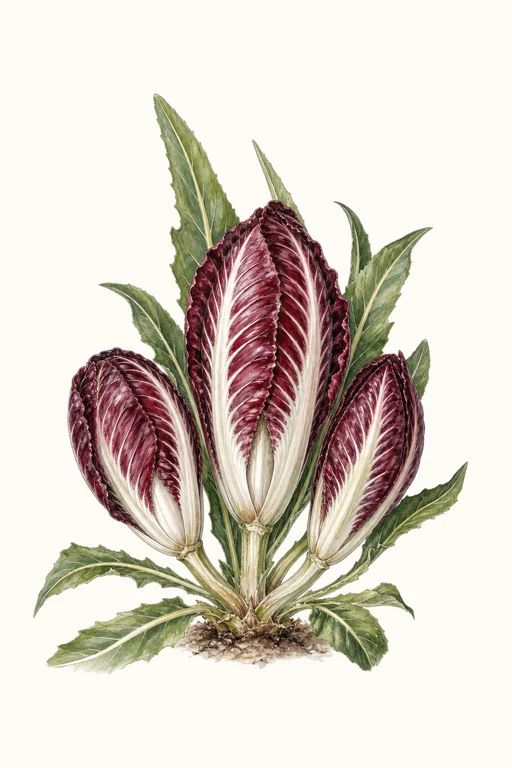
Crisp as a cool morning breeze, Verona Red forms tight, upright heads with a jewel-toned blush—deep red to wine-purple at the ribs and edges, fading to a pale, creamy heart.
The leaves are pleasantly bitter-sweet and wonderfully crunchy, holding their snap for fresh salads and vibrant garnishes. Grow it for striking color and a bold, radicchio-forward bite that shines in braises, roasted plates, and tangy sauces.
Light: Full SunMaturity: 55 DaysHabit: Rosette
Planting schedules and alerts are optimized for Columbus (Zone 6b).
Crop Dates
| Milestone | Date |
|---|---|
| Start Indoors | Direct Sow |
| Last Frost | Apr 25th |
| Transplant / Sow Outdoors | Apr 18th |
| Harvest Begins | Jun 12th |
| Harvest Ends | Oct 16th |
Crop Details
| Trait | Value |
|---|---|
| Days to Maturity | 55 |
| Sun Requirements | Full Sun |
| Growth Habit | Rosette |
| Support Needed | None |
| Planting Depth | Normal |
| Germination Temp (°F) | 45 |
| Min Soil Temp (°F) | 40 |
| Min Night Temp (°F) | 28 |
| Harden Off (days) | Not Required |
Culinary Notes

Chef's Note
Verona Red is a radicchio meant to be heard: its upright heads deliver sharp, bitter-sweet crunch that stands up to punchy acid and salty fats. When heat is applied, the ribs go tender while the leaf edges still crisp, making it a great choice for braises and roasted wedges that taste like a wine-bar side dish.

Best Uses
- shaved or chunked raw salads with bold vinaigrette that clings to crisp edges
- braised in a little olive oil until the ribs soften but the leaves don’t go limp
- roasted or grilled wedges to caramelize the edges and tame bitterness
- tossed into tangy sauces and reductions where bitterness steadies richness

Flavor Profile

Kitchen Pairings
Frequently Asked Questions
What’s the most common pest or disease problem on Cichorium intybus (Verona Red) and how do I treat it?
How often should I water Cichorium intybus during the main growing phase?
How can I tell when Verona Red (Cichorium intybus) is ready to harvest?
Sowing Tips

Transplant Conditions
Wait until soil reaches 40°F and nights stay above 28°F before moving outdoors.
Expert Note

For best heads and sweetness, keep soil evenly moist and target growth through cool weather—radicchio’s winter hardiness improves flavor.