
Verona Savoy
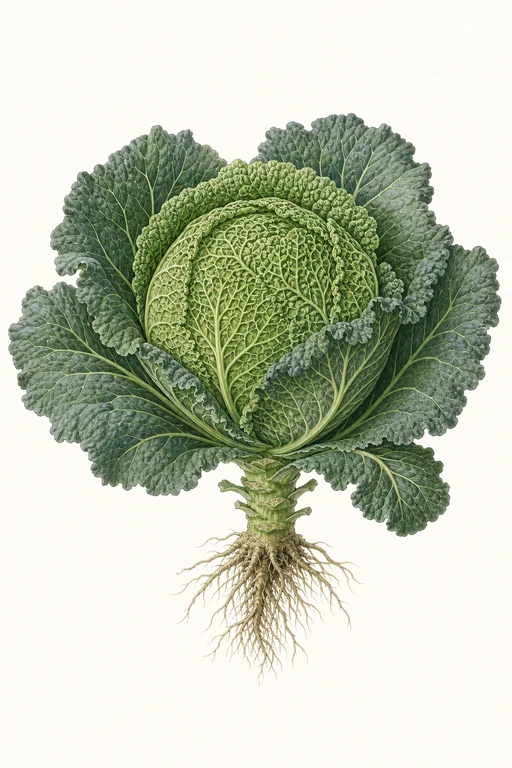
Velvet-deep savoy folds unfurl into a dense, apple-green head with a softly crinkled surface that catches the light like fine lace.
Verona Savoy delivers a sweet, mild flavor and a tender, succulent bite—ideal for showcasing in hearty seasonal dishes where its texture can shine. Grow it for reliable, 75-day maturity and a beautiful, uniform head that looks as good as it tastes.
Light: Full SunMaturity: 75 DaysHabit: Rosette
Crop Dates : 4a
| Milestone | Date |
|---|---|
| Start Indoors | Apr 17th |
| Last Frost | May 15th |
| Transplant / Sow Outdoors | May 8th |
| Harvest Begins | Jul 22nd |
| Harvest Ends | Sep 24th |
Crop Details
| Trait | Value |
|---|---|
| Days to Maturity | 75 |
| Sun Requirements | Full Sun |
| Growth Habit | Rosette |
| Support Needed | None |
| Planting Depth | Normal |
| Germination Temp (°F) | 75 |
| Min Soil Temp (°F) | 45 |
| Min Night Temp (°F) | 32 |
| Harden Off (days) | 6 |
Culinary Notes

Chef's Note
Verona Savoy’s crinkled, velvet leaves cook down into silky strands without going cabbage-crunchy or watery, so it performs especially well in braises and fast skillet turns. Keep the seasoning bright—vinegar or mustard wakes up its sweet, mild profile and makes every fold feel tender and clean.

Best Uses
- braise in a hot pan until the folds turn silky
- shred for quick-cook skillet cabbage (stays sweet, not watery)
- use whole-leaf blanching for tight cabbage rolls
- roast wedges for caramelized edges and toothsome crunch

Flavor Profile

Kitchen Pairings
Frequently Asked Questions
What disease problem is most common for Brassica oleracea var. capitata (savoy cabbage), and how can I stop it?
How often should I water Verona Savoy during the 60–75 day head-filling phase?
How do I tell when Verona Savoy is ready to harvest?
Sowing Tips

Transplant Conditions
Wait until soil reaches 45°F and nights stay above 32°F before moving outdoors. Harden off for 6 days first.
Expert Note

For the best red-tinged Savoy color and flavor, avoid heat stress—start early enough to transplant while nights are still cool, and keep soil evenly moist.