
Victoria
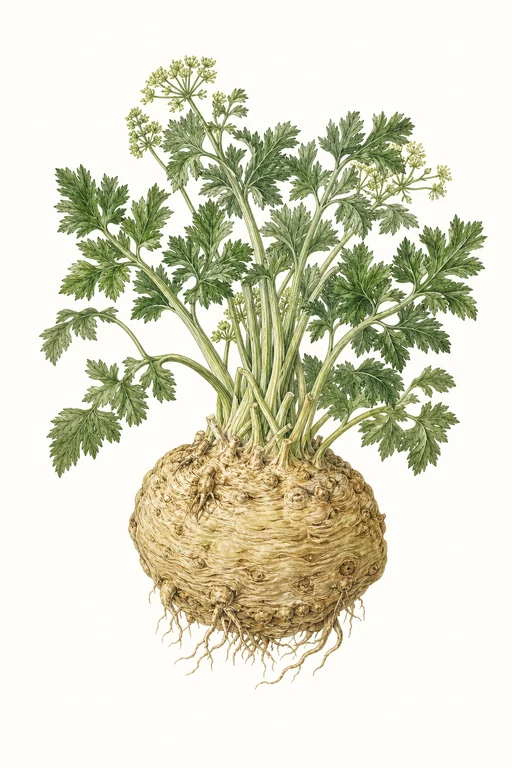
Aromatically rich and deeply satisfying, Victoria celeriac forms a broad, knobbly crown with a creamy interior that carries a clean, celery-bright flavor and a subtly nutty edge.
The flesh is fine-grained and tender, holding its character beautifully whether you roast it to a caramel-kissed sweetness or simmer it into velvety purées and comforting gratins. Grow Victoria for a dependable 85-day harvest and a root that’s as handsome on the counter as it is in the pan—ideal for mashing, roasting, and pickling-style preparations.
Light: Part SunMaturity: 85 DaysHabit: Upright
Planting schedules and alerts are optimized for Columbus (Zone 6b).
Crop Dates
| Milestone | Date |
|---|---|
| Start Indoors | Feb 14th |
| Last Frost | Apr 25th |
| Transplant / Sow Outdoors | Apr 11th |
| Harvest Begins | Jul 5th |
| Harvest Ends | Oct 16th |
Crop Details
| Trait | Value |
|---|---|
| Days to Maturity | 85 |
| Sun Requirements | Part Sun |
| Growth Habit | Upright |
| Support Needed | None |
| Planting Depth | Normal |
| Germination Temp (°F) | 70 |
| Min Soil Temp (°F) | 40 |
| Min Night Temp (°F) | 28 |
| Harden Off (days) | 6 |
Culinary Notes

Chef's Note
Victoria celeriac cooks up creamy without turning mushy, keeping that celery-clean snap even after roasting or simmering. Go for it when you want a root that brings both aroma and a nutty, custardy mouthfeel—especially in purées, gratins, and vinegar-bright preparations.

Best Uses
- roasted wedges with caramelized edges
- velvety celeriac purée or mash
- baked gratin with cream and nutmeg
- thin slices for quick pickling-style tucks

Flavor Profile

Kitchen Pairings
Frequently Asked Questions
What pest or disease commonly affects Rheum rhabarbarum (Victoria) and how do I manage it?
How often should I water Victoria rhubarb during the main growing phase?
How can I tell when Victoria rhubarb is ready to harvest?
Sowing Tips

Transplant Conditions
Wait until soil reaches 40°F and nights stay above 28°F before moving outdoors. Harden off for 6 days first.
Expert Note

Start indoors early for steady growth, then transplant only once nights are consistently above cool-stress levels to avoid stunting and early toughening.