
Violet de Provence
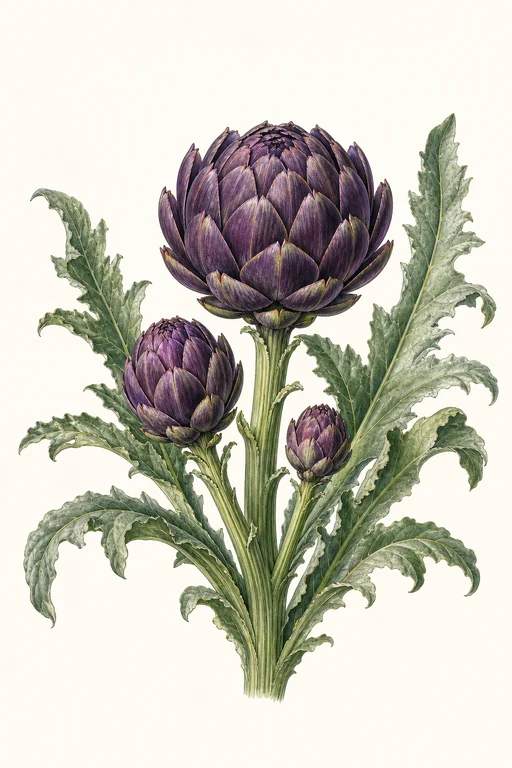
A regal violet hush—Violet de Provence artichokes unfurl into richly colored buds with a velvety, tightly layered texture and a subtly sweet, nutty depth.
At maturity, the globes hold their shape beautifully, offering tender inner hearts and meaty outer bracts that shine when roasted or grilled, and also excel in creamy sauces and preserved preparations. Grow this heritage favorite for its showy, long-season performance and its unmistakable, jewel-toned presence in the garden.
Light: Full SunMaturity: 120 DaysHabit: Clumping
Planting schedules and alerts are optimized for Columbus (Zone 6b).
Crop Dates
| Milestone | Date |
|---|---|
| Start Indoors | Feb 28th |
| Last Frost | Apr 25th |
| Transplant / Sow Outdoors | Apr 25th |
| Harvest Begins | Aug 23rd |
| Harvest Ends | Oct 16th |
Crop Details
| Trait | Value |
|---|---|
| Days to Maturity | 120 |
| Sun Requirements | Full Sun |
| Growth Habit | Clumping |
| Support Needed | None |
| Planting Depth | Normal |
| Germination Temp (°F) | 70 |
| Min Soil Temp (°F) | 45 |
| Min Night Temp (°F) | 35 |
| Harden Off (days) | 7 |
Culinary Notes

Chef's Note
Violet de Provence brings a lush, jewel-toned globe with a nutty sweetness that only blooms when you cook the bitterness down—roast or braise it until the bracts turn pliant and the hearts go custardy. The result is heart-first eating: tender enough to blend into a thick sauce, but still meaty for pulling bracts through butter and lemon.

Best Uses
- halved and roasted/grilled until the bracts go bronzed and the hearts get tender and creamy
- creamy reductions (steam-to-butter braise, then blend) for a thick, spoonable sauce
- preserved preparations—brined or oil-packed bracts for tangy, chewy bites
- hot-and-hungry dipping: warm artichoke bottoms with melted butter or aioli

Flavor Profile

Kitchen Pairings
Frequently Asked Questions
What pest or disease most commonly affects Cynara scolymus (artichoke), and what should I do?
How often should I water Cynara scolymus during the main growing season?
How can I tell when Violet de Provence artichokes are ready to harvest?
Sowing Tips

Transplant Conditions
Wait until soil reaches 45°F and nights stay above 35°F before moving outdoors. Harden off for 7 days first.
Expert Note

For tender, high-quality young buds, start plants early and keep soil evenly moist after transplanting to avoid stress-driven toughening.