
Wasabi
Peppery and vividly aromatic, Wasabi arugula brings a bright, wasabi-like bite that blooms on the palate with a crisp, tender snap.
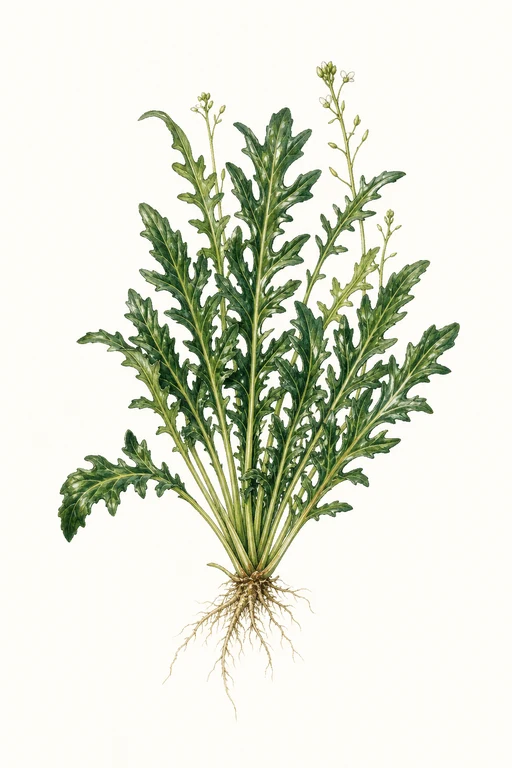
The leaves form an upright, leafy rosette of deep green, with a pleasantly delicate texture that stays lively from first harvest through repeat picking. Ideal for fresh salads, bold greens blends, and quick tosses where its pungent character can shine—also wonderful stirred into sauces for an instant kick.
Light: Part SunMaturity: 40 DaysHabit: Rosette
Planting schedules and alerts are optimized for Columbus (Zone 6b).
Crop Dates
| Milestone | Date |
|---|---|
| Start Indoors | Direct Sow |
| Last Frost | Apr 25th |
| Transplant / Sow Outdoors | Apr 25th |
| Harvest Begins | Jun 4th |
| Harvest Ends | Oct 16th |
Crop Details
| Trait | Value |
|---|---|
| Days to Maturity | 40 |
| Sun Requirements | Part Sun |
| Growth Habit | Rosette |
| Support Needed | None |
| Planting Depth | Normal |
| Germination Temp (°F) | 70 |
| Min Soil Temp (°F) | 40 |
| Min Night Temp (°F) | 30 |
| Harden Off (days) | 5 |
Culinary Notes

Chef's Note
This variety’s heat isn’t smoky or sweet—it’s sharp, nose-clearing, and built to stay present in a cold salad without wilting into blandness. Use it raw for snap and maximum punch, or add it at the very end of a warm dish to keep the bite crisp rather than harsh.

Best Uses
- raw tosses in a lemony vinaigrette where the leaves stay crisp
- greens blends with fatty elements (burrata/cheese) to tame the bite
- quick sauté or stir-in at the end for a controlled, less-aggressive pepper heat
- stirred into yogurt or mayo-based sauces for an instant spicy-green kick

Flavor Profile

Kitchen Pairings
Frequently Asked Questions
What pest or disease is most common on wasabi-like brassicas, and what should I do if I see it?
How often should I water eruca vesicaria subsp. sativa during the main growing phase?
How can I tell when Eruca vesicaria subsp. sativa is ready to harvest?
Sowing Tips

Transplant Conditions
Wait until soil reaches 40°F and nights stay above 30°F before moving outdoors. Harden off for 5 days first.
Expert Note

For the best wasabi-like bite, grow in cool weather and harvest baby leaves before plants bolt.