
Whirlybird Cream
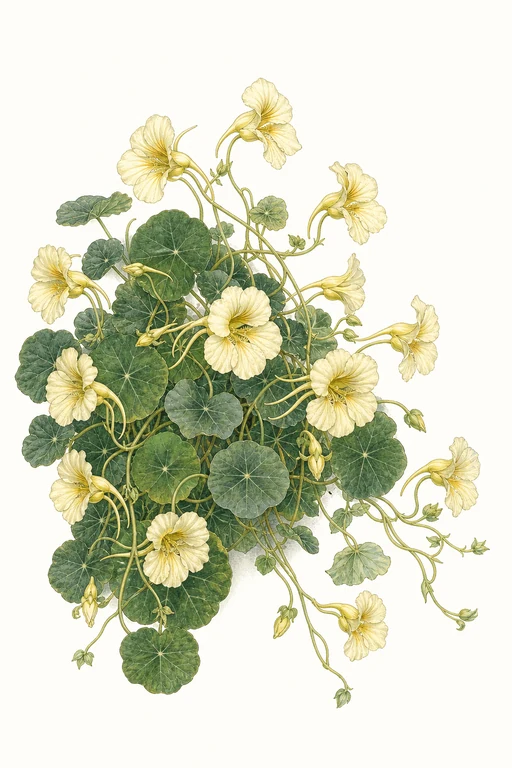
Whirlybird Cream unfurls with a luminous, creamy-gold bloom that seems to whirl in the sun—delicate petals with a soft, warm glow and a gentle, peppery lift.
The foliage is tender and succulent, forming a lush, trailing mound that stays attractive as it flowers, offering crisp, fresh leaves with a bright, slightly peppery character. Grow it for standout garden color and for elegant garnishes that turn salads, platters, and herb-forward dishes into living bouquets.
Light: Full SunMaturity: 50 DaysHabit: Upright
Crop Dates : 8a
| Milestone | Date |
|---|---|
| Start Indoors | Direct Sow |
| Last Frost | Apr 1st |
| Transplant / Sow Outdoors | Apr 1st |
| Harvest Begins | May 21st |
| Harvest Ends | Nov 5th |
Crop Details
| Trait | Value |
|---|---|
| Days to Maturity | 50 |
| Sun Requirements | Full Sun |
| Growth Habit | Upright |
| Support Needed | None |
| Planting Depth | Normal |
| Germination Temp (°F) | 70 |
| Min Soil Temp (°F) | 55 |
| Min Night Temp (°F) | 40 |
| Harden Off (days) | Not Required |
Culinary Notes

Chef's Note
Nasturtium ‘Whirlybird Cream’ gives you peppery zing without the harsh edge—petals stay delicate and floral while the leaves offer a juicy, succulent crunch. It’s the kind of garnish that doesn’t just look pretty; it actually seasons, especially when you keep the dressing light and the dish bright.

Best Uses
- tossed into mixed salads to stay crisp under light vinaigrettes
- plated as an edible garnish on white fish, chicken, or omelets
- infused into light vinegars or quick pickles for a peppery lift
- folded through compound butter for a fresh, peppery garnish-ready finish

Flavor Profile

Kitchen Pairings
Frequently Asked Questions
What pest or disease most often affects Tropaeolum majus (whirlybird nasturtium), and how do I control it?
How often should I water Tropaeolum majus during the main growing phase?
How can I tell when Tropaeolum majus is ready to harvest?
Sowing Tips

Transplant Conditions
Wait until soil reaches 55°F and nights stay above 40°F before moving outdoors.
Expert Note

Sow nasturtium seeds directly where you want them (or plant outdoors as soil warms), because they resent root disturbance and flower best with steady sun.