
Whirlybird Peach Melba
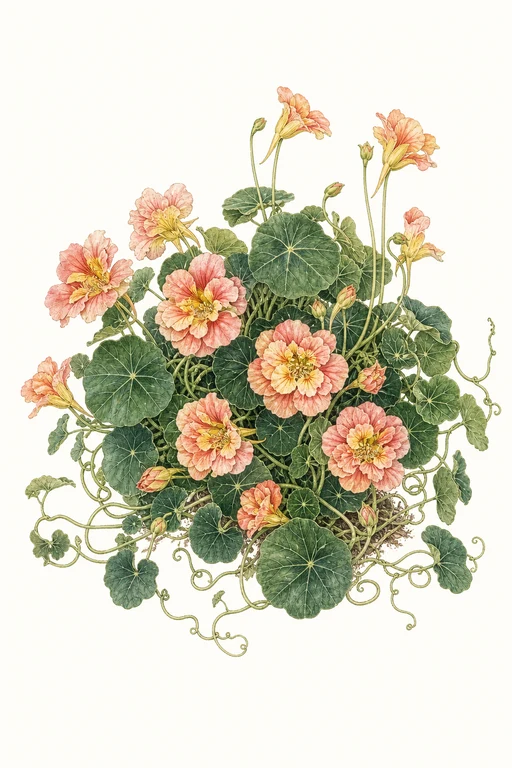
Fragrant, honeyed blossoms unfurl in a whorl of warm peach and buttery gold, each petal edged like a brushstroke—an instant garden highlight with a delicate, peppery lift.
“Whirlybird Peach Melba” forms compact, trailing mounds that keep producing showy flowers in abundance, with tender leaves that offer a crisp bite and vivid color for standout garnishes. Grow it for fresh floral beauty—ideal for topping salads, brightening platters, and adding a lively, tangy accent to vinegars and quick pickles.
Light: Full SunMaturity: 40 DaysHabit: Spreading
Location not set yet
Location not set yet
Enter your ZIP for local crop dates
Whirlybird Peach Melba Planting Dates by USDA Zone
Estimated US hardiness-zone windows for sow, transplant, and harvest. Enter a US ZIP above for exact local dates, or open a zone below.
| Zone | Start Indoors | Sow / Transplant | Harvest |
|---|---|---|---|
| Zone 1a | Protected Environment Only | ||
| Zone 1b | Direct Sow | Jun 1st | Jul 11th – Aug 1st |
| Zone 2a | Direct Sow | May 25th | Jul 4th – Aug 29th |
| Zone 2b | Direct Sow | May 15th | Jun 24th – Aug 25th |
| Zone 3a | Direct Sow | May 15th | Jun 24th – Sep 1st |
| Zone 3b | Direct Sow | May 19th | Jun 28th – Sep 21st |
| Zone 4a | Direct Sow | May 15th | Jun 24th – Sep 24th |
| Zone 4b | Direct Sow | May 13th | Jun 22nd – Sep 27th |
| Zone 5a | Direct Sow | May 8th | Jun 17th – Sep 30th |
| Zone 5b | Direct Sow | May 4th | Jun 13th – Oct 5th |
| Zone 6a | Direct Sow | May 1st | Jun 10th – Oct 10th |
| Zone 6b | Direct Sow | Apr 25th | Jun 4th – Oct 16th |
| Zone 7a | Direct Sow | Apr 20th | May 30th – Oct 20th |
| Zone 7b | Direct Sow | Apr 10th | May 20th – Oct 28th |
| Zone 8a | Direct Sow | Apr 1st | May 11th – Nov 5th |
| Zone 8b | Direct Sow | Mar 23rd | May 2nd – Nov 12th |
| Zone 9a | Direct Sow | Mar 6th | Apr 15th – Nov 26th |
| Zone 9b | Direct Sow | Feb 9th | Mar 21st – Dec 9th |
| Zone 10a | — | Oct 1st | Nov 10th – Feb 28th |
| Zone 10b | — | Oct 1st | Nov 10th – Feb 28th |
| Zone 11a | — | Oct 1st | Nov 10th – Feb 28th |
| Zone 11b | — | Oct 1st | Nov 10th – Feb 28th |
| Zone 12a | — | Oct 1st | Nov 10th – Feb 28th |
| Zone 12b | — | Oct 1st | Nov 10th – Feb 28th |
| Zone 13a | — | Oct 1st | Nov 10th – Feb 28th |
| Zone 13b | — | Oct 1st | Nov 10th – Feb 28th |
Crop Details
| Trait | Value |
|---|---|
| Days to Maturity | 40 |
| Sun Requirements | Full Sun |
| Growth Habit | Spreading |
| Support Needed | None |
| Planting Depth | Normal |
| Germination Temp (°F) | 70 |
| Min Soil Temp (°F) | 55 |
| Min Night Temp (°F) | 35 |
| Harden Off (days) | Not Required |
Culinary Notes

Chef's Note
These Nasturtium flowers read like peachy-gold perfume with a snap of pepper at the finish—use them raw so the petals stay tender-crisp instead of turning slack. Great for adding a lively, tangy accent to cool dairy or lemon-brightened plates where that pepper lift can cut through.

Best Uses
- fresh garnish on bitter greens or citrusy salads
- quick-pickled blossoms for a tangy, poppy topper
- folding into yogurt or ricotta with lemon for a bright spoonable finish
- topping crostini with soft cheese and flaky salt

Flavor Profile

Kitchen Pairings
Frequently Asked Questions
Why are my Tropaeolum majus (nasturtium) plants getting yellow leaves with spots, and how do I stop it?
How often should I water Tropaeolum majus during active growth in full sun?
How can I tell when my Tropaeolum majus is ready to harvest?
Sowing Tips

Transplant Conditions
Wait until soil reaches 55°F and nights stay above 35°F before moving outdoors.
Expert Note

For best branching and dense foliage, sow in warm weather after frost and avoid over-fertilizing (nasturtiums prefer poorer soils).