
White Cushaw
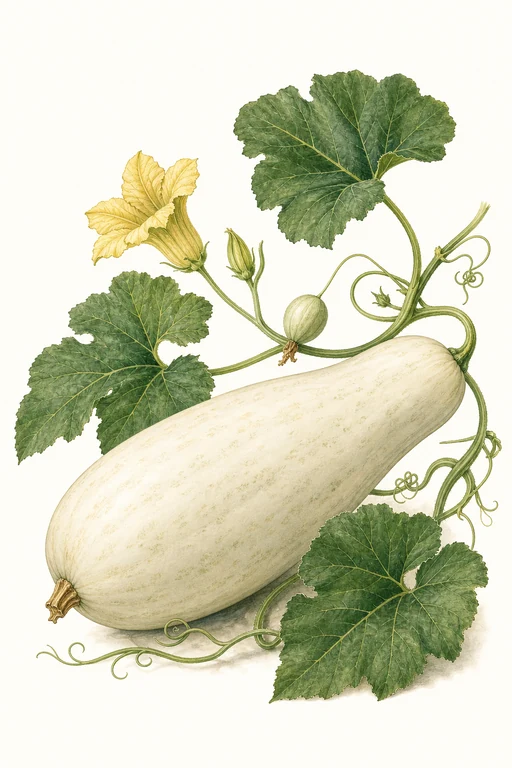
A slow-summer treasure, White Cushaw develops a luminous, creamy-white shell that feels as substantial as it looks—firm-fleshed and richly textured when fully matured.
The flesh offers a mellow, subtly sweet flavor with a fine, velvety bite, making it a favorite for hearty winter preparations, from roasting to creamy purées and savory sauces. Grow it for its long, trailing vines and its show-stopping, pale fruit that stores beautifully for months of seasonal enjoyment.
Light: Full SunMaturity: 95 DaysHabit: Vine
Planting schedules and alerts are optimized for Columbus (Zone 6b).
Crop Dates
| Milestone | Date |
|---|---|
| Start Indoors | Apr 11th |
| Last Frost | Apr 25th |
| Transplant / Sow Outdoors | Apr 25th |
| Harvest Begins | Jul 29th |
| Harvest Ends | Oct 16th |
Crop Details
| Trait | Value |
|---|---|
| Days to Maturity | 95 |
| Sun Requirements | Full Sun |
| Growth Habit | Vine |
| Support Needed | Trellis |
| Planting Depth | Normal |
| Germination Temp (°F) | 75 |
| Min Soil Temp (°F) | 65 |
| Min Night Temp (°F) | 55 |
| Harden Off (days) | 10 |
Culinary Notes

Chef's Note
White Cushaw lands in that rare lane: mellow and sweet but with enough flesh density to go creamy without turning to mush. Roast or simmer it until it’s transformably velvety, then lean on sage, brown butter, garlic, or smoke to sharpen the flavor and make it feel deeply winter-ready.

Best Uses
- roasted wedges with browned edges for a spoonable texture
- thick purée with butter or olive oil for a silky side
- slow-simmered squash bisque or chowder-style soup
- savory mash for tacos or grain bowls (holds its body, not watery)

Flavor Profile

Frequently Asked Questions
What pest or disease most commonly affects Cucurbita argyrosperma (white cushaw), and how can I control it at home?
How often should I water Cucurbita argyrosperma during peak growth, and what soil moisture level should I keep?
How do I tell when white cushaw (Cucurbita argyrosperma) is ready to harvest?
Sowing Tips

Transplant Conditions
Wait until soil reaches 65°F and nights stay above 55°F before moving outdoors. Harden off for 10 days first.

Direct Sow Preferred
Sensitive roots — does not transplant well. If starting indoors, use biodegradable pots and disturb roots as little as possible when moving outdoors.
Expert Note

Harden off for 7–10 days and transplant only when nighttime temps stay safely warm to avoid cold-stress and slow vine establishment.