
White Honeydew
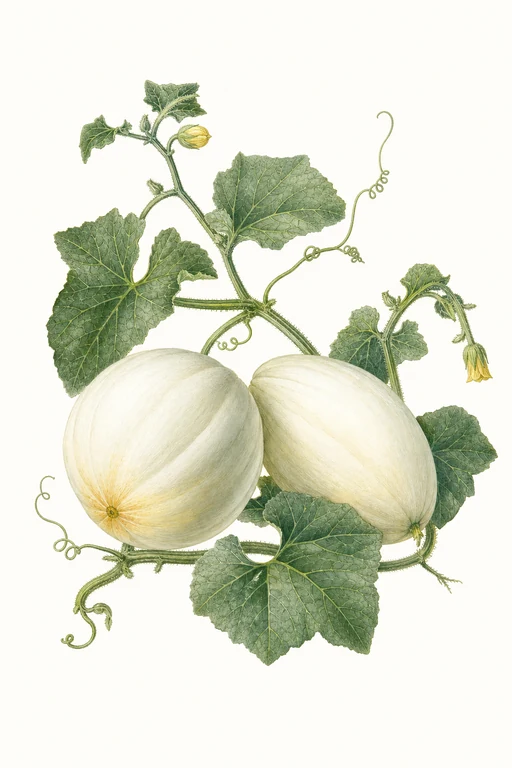
Fragrant and honey-sweet, White Honeydew drapes the garden in pale, luminous fruit that seem dusted with moonlight.
At maturity, the flesh turns creamy and tender with a fine, succulent texture—ideal for savoring straight from the vine, and equally captivating for refreshing fruit salads and delicate chilled blends. Grow it for its distinctive, softly blushed white rind and its dependable 80-day rhythm from sowing to harvest.
Light: Full SunMaturity: 80 DaysHabit: Vine
Planting schedules and alerts are optimized for Columbus (Zone 6b).
Crop Dates
| Milestone | Date |
|---|---|
| Start Indoors | Direct Sow |
| Last Frost | Apr 25th |
| Transplant / Sow Outdoors | May 9th |
| Harvest Begins | Jul 28th |
| Harvest Ends | Oct 16th |
Crop Details
| Trait | Value |
|---|---|
| Days to Maturity | 80 |
| Sun Requirements | Full Sun |
| Growth Habit | Vine |
| Support Needed | Trellis |
| Planting Depth | Normal |
| Germination Temp (°F) | 70 |
| Min Soil Temp (°F) | 65 |
| Min Night Temp (°F) | 55 |
| Harden Off (days) | 10 |
Culinary Notes

Chef's Note
White Honeydew is built for cool, fast eating—its creamy flesh drinks up citrus and salt without turning sloshy. The fragrant, honeyed sweetness shines when paired with high-contrast elements like lime and prosciutto, not when you bury it under heavy seasoning.

Best Uses
- sliced cold straight-from-the-fridge, salted lightly to make the sweetness pop
- fruit salad base where it stays tender instead of getting mealy
- chilled melon soup or yogurt-cold blend with a squeeze of citrus
- stacked with prosciutto or salty cheese for a sweet-saline contrast

Flavor Profile

Frequently Asked Questions
What pest or disease is most likely to hit Cucumis melo (white honeydew), and what should I do early?
How often should I water white honeydew during peak growth, and what soil moisture level is ideal?
How can I tell when white honeydew (Cucumis melo) is ready to harvest?
Sowing Tips

Transplant Conditions
Wait until soil reaches 65°F and nights stay above 55°F before moving outdoors. Harden off for 10 days first.

Direct Sow Preferred
Sensitive roots — does not transplant well. If starting indoors, use biodegradable pots and disturb roots as little as possible when moving outdoors.
Expert Note

For best sweetness, keep vines evenly watered after flowering, then reduce irrigation slightly in the final week so sugars concentrate.