
White Lady
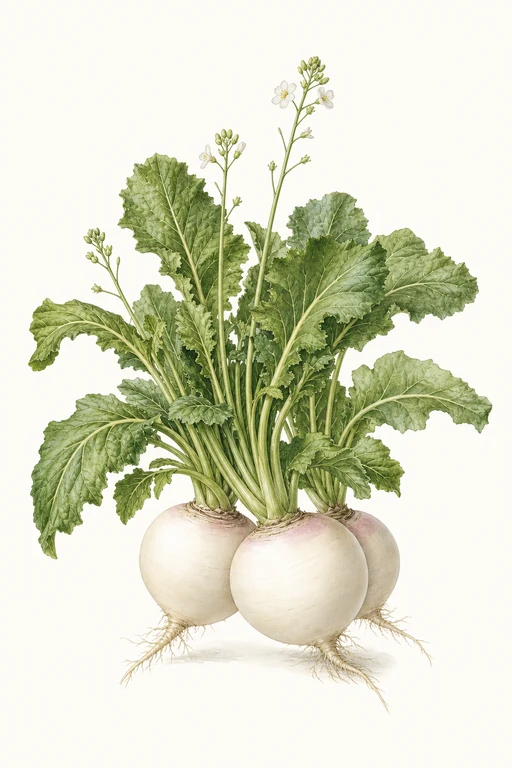
Crisp, snow-bright flesh with a faintly sweet, peppery lift—White Lady turnips form a clean, tender bite that feels refined straight from the garden.
At about 50 days, the roots swell into smooth, rounded globes with a delicate, creamy interior and a firm yet yielding texture that holds up beautifully for roasting, mashing, and hearty winter-style sides. Grow White Lady for a dependable, early harvest and a luminous color that brightens every platter and preserves well for later use.
Light: Full SunMaturity: 50 DaysHabit: Rosette
Planting schedules and alerts are optimized for Columbus (Zone 6b).
Crop Dates
| Milestone | Date |
|---|---|
| Start Indoors | Direct Sow |
| Last Frost | Apr 25th |
| Transplant / Sow Outdoors | Apr 25th |
| Harvest Begins | Jun 14th |
| Harvest Ends | Oct 16th |
Crop Details
| Trait | Value |
|---|---|
| Days to Maturity | 50 |
| Sun Requirements | Full Sun |
| Growth Habit | Rosette |
| Support Needed | None |
| Planting Depth | Normal |
| Germination Temp (°F) | 45 |
| Min Soil Temp (°F) | 40 |
| Min Night Temp (°F) | 28 |
| Harden Off (days) | Not Required |
Culinary Notes

Chef's Note
White Lady turnips give you that snow-white, creamy center with a crisp, yielding bite—sweet up front, then a peppery brassica lift that doesn’t fade. It’s built for heat (roast/mash) or acid (pickle/dress) where its texture holds together instead of going woolly.

Best Uses
- shaved or quick-sliced in vinegar-dressed salads where the crunch stays clean
- roasting whole or in wedges for a sweet, caramel-edged exterior
- mashing or pureeing for a smooth, lightly peppery side
- quick-pickling to keep that snow-bright firmness

Flavor Profile

Frequently Asked Questions
What pest or disease most commonly troubles Brassica rapa var. rapa (white “Lady” type), and how can I manage it?
How often should I water Brassica rapa var. rapa during the main growing phase?
How can I tell when Brassica rapa var. rapa is ready to harvest?
Sowing Tips

Transplant Conditions
Wait until soil reaches 40°F and nights stay above 28°F before moving outdoors.
Expert Note

For best sweetness, keep the soil consistently moist and avoid heat stress—turnips taste sweeter from cool weather.