
White Leaf Amaranth
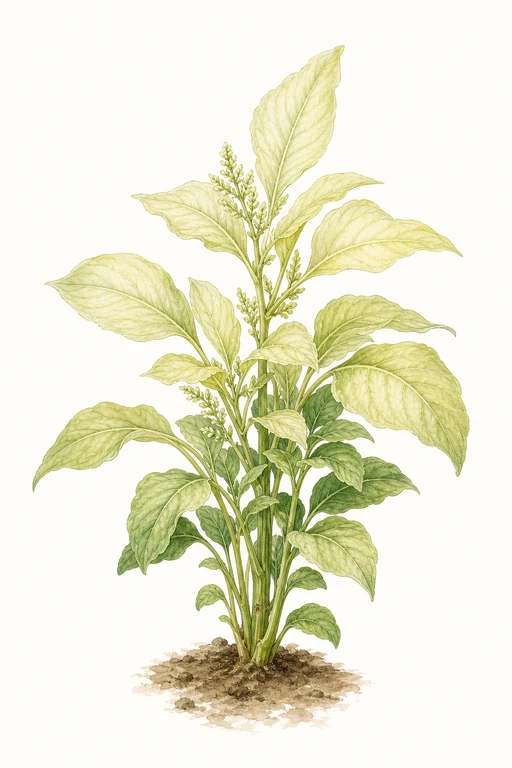
Tender, vividly fresh leaves emerge in a soft, pale green—an airy “white-leaf” look that feels luminous in the garden and turns silky when cooked.
White Leaf Amaranth (Callaloo) builds a quick, upright clump in about 40 days, producing abundant foliage with a mild, grassy sweetness and a delicate, spoonable texture. Grow it for leafy sautés, savory pot dishes, and vibrant sauces—its young leaves shine when you want flavor that’s gentle yet deeply green.
Light: Full SunMaturity: 40 DaysHabit: Upright
Planting schedules and alerts are optimized for Columbus (Zone 6b).
Crop Dates
| Milestone | Date |
|---|---|
| Start Indoors | Direct Sow |
| Last Frost | Apr 25th |
| Transplant / Sow Outdoors | Apr 25th |
| Harvest Begins | Jun 4th |
| Harvest Ends | Oct 16th |
Crop Details
| Trait | Value |
|---|---|
| Days to Maturity | 40 |
| Sun Requirements | Full Sun |
| Growth Habit | Upright |
| Support Needed | None |
| Planting Depth | Normal |
| Germination Temp (°F) | 70 |
| Min Soil Temp (°F) | 60 |
| Min Night Temp (°F) | 50 |
| Harden Off (days) | Not Required |
Culinary Notes

Chef's Note
White Leaf Amaranth (callaloo) is built for speed: its young leaves go from crisp to silky fast, giving you that gentle sweet-green flavor without getting fibrous. Use it like a tender spinach cousin—wilting it quickly in fat and finishing with lime keeps it bright and spoon-ready.

Best Uses
- quick sauté with garlic and hot oil until just wilted
- creamy callaloo-style pot simmer (coconut milk or dairy) where leaves collapse into a spoonable base
- tossed into brothy soups for a soft, verdant finish
- blended into a warm green sauce for spooning over rice or dumplings

Flavor Profile

Frequently Asked Questions
What pest or disease commonly affects Amaranthus viridis (white leaf amaranth), and how can I manage it at home?
How often should I water Amaranthus viridis during peak leaf growth, and what soil moisture level does it need?
How do I know when to harvest Amaranthus viridis for the best leaf quality?
Sowing Tips

Transplant Conditions
Wait until soil reaches 60°F and nights stay above 50°F before moving outdoors.
Expert Note

For best pale-green, mild leaves, keep plants evenly watered and harvest young (before they get tough or grainy).