
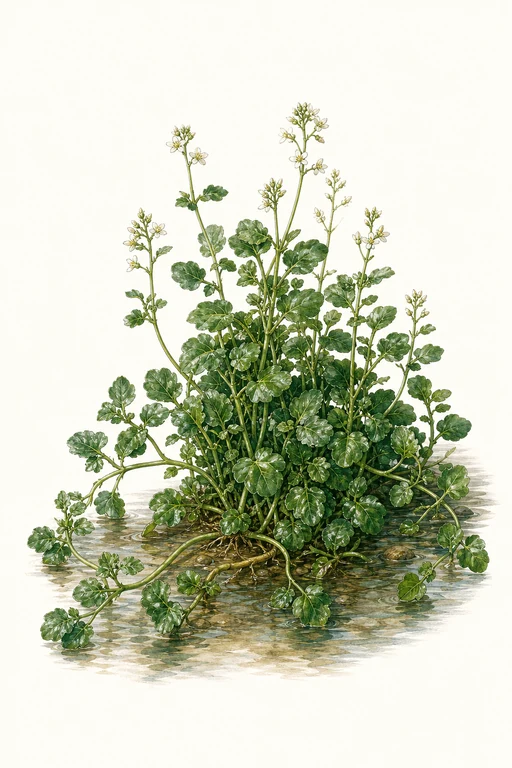
Winter Cress
Peppery and vividly green, Winter Cress brings a crisp, water-bright bite with tender leaves that stay pleasantly succulent as cool weather settles in.
Expect a lively, clean heat—less harsh than many greens—paired with a delicate, juicy texture that shines in fresh bunches and quick infusions. Ideal for winter sowings and early spring harvests, it’s a dependable garden favorite for bold flavor and fast, satisfying growth in moist conditions.
Light: Part SunMaturity: 40 DaysHabit: Rosette
Planting schedules and alerts are optimized for Columbus (Zone 6b).
Crop Dates
| Milestone | Date |
|---|---|
| Start Indoors | Direct Sow |
| Last Frost | Apr 25th |
| Transplant / Sow Outdoors | Apr 25th |
| Harvest Begins | Jun 4th |
| Harvest Ends | Oct 16th |
Crop Details
| Trait | Value |
|---|---|
| Days to Maturity | 40 |
| Sun Requirements | Part Sun |
| Growth Habit | Rosette |
| Support Needed | None |
| Planting Depth | Surface |
| Germination Temp (°F) | 55 |
| Min Soil Temp (°F) | 40 |
| Min Night Temp (°F) | 28 |
| Harden Off (days) | Not Required |
Culinary Notes

Chef's Note
Winter Cress is the kind of leafy green that tastes like cold air and clean water—peppery but not punishing, with leaves that don’t turn to mush when handled fast. Use it raw or as a last-second finish so you keep that crisp, juicy snap and the bright heat that slices through fat.

Best Uses
- raw bunches in a cold salad where it stays snappy
- finishing green for soups and broths—stir in at the last minute
- quick infusions or chiffonade over white beans for a peppery wake-up
- topping for rich proteins (fish/eggs) to cut through with crisp heat

Flavor Profile

Kitchen Pairings
Frequently Asked Questions
What pest or disease commonly affects Nasturtium officinale (winter cress), and how can I manage it?
How often should I water Nasturtium officinale during the main growing phase?
How do I know when winter cress (Nasturtium officinale) is ready to harvest?
Sowing Tips

Transplant Conditions
Wait until soil reaches 40°F and nights stay above 28°F before moving outdoors.
Expert Note

For best winter flavor, keep soil consistently moist and harvest frequently to prevent bitterness and seed set.