
Winter King Savoy
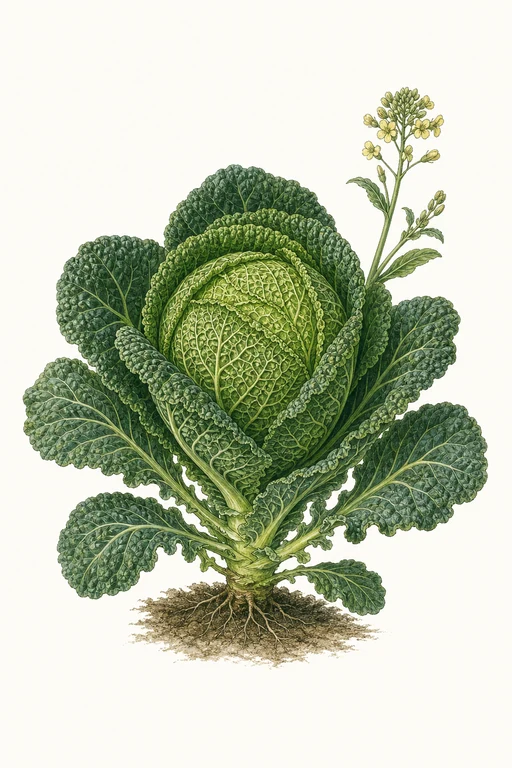
Winter King Savoy brings a silken, deeply crinkled green that feels almost velvety in the garden—tight heads form with a regal, layered rosette look as cool weather settles in.
The flavor is sweet and mellow with a gentle cabbage tang, and the texture stays tender through the season, making it a standout for hearty braises, robust sautés, and comforting soups. Grow it for dependable winter performance and a showpiece head that turns every harvest basket into a verdant treasure.
Light: Full SunMaturity: 75 DaysHabit: Rosette
Crop Dates : 2a
| Milestone | Date |
|---|---|
| Start Indoors | Apr 27th |
| Last Frost | May 25th |
| Transplant / Sow Outdoors | May 18th |
| Harvest Begins | Aug 1st |
| Harvest Ends | Aug 29th |
Crop Details
| Trait | Value |
|---|---|
| Days to Maturity | 75 |
| Sun Requirements | Full Sun |
| Growth Habit | Rosette |
| Support Needed | None |
| Planting Depth | Normal |
| Germination Temp (°F) | 45 |
| Min Soil Temp (°F) | 40 |
| Min Night Temp (°F) | 30 |
| Harden Off (days) | 6 |
Culinary Notes

Chef's Note
Winter King Savoy’s crinkled leaves melt into soft, silky strands without falling apart, so it holds up beautifully in long braises and spoonable soups. It tastes sweet and composed rather than sharp, which is why it takes to butter-and-acid finishing like a pro.

Best Uses
- braised until the layers go velvety and cling to the sauce
- thick-cut sautéing where the crinkles crisp at the edges before turning tender
- hearty soups—shredded and added late so it stays springy, not mushy
- cabbage rolls or stuffed layers that need structure and then collapse into silk

Flavor Profile

Kitchen Pairings
Frequently Asked Questions
What pest or disease commonly affects Brassica oleracea var. capitata (Savoy cabbage), and what should I do?
How often should I water Winter King Savoy during the main head-forming phase?
How can I tell when my Winter King Savoy is ready to harvest?
Sowing Tips

Transplant Conditions
Wait until soil reaches 40°F and nights stay above 30°F before moving outdoors. Harden off for 6 days first.
Expert Note

Harden off thoroughly and transplant into cool, firm soil so the plants size up before the hardest winter weather sets in.