
Winter Sweet
Sink your spoon into Winter Sweet’s velvety, deep-orange flesh—sweet, mellow, and richly aromatic, with a fine-grained tenderness that turns luxuriously creamy when cooked.
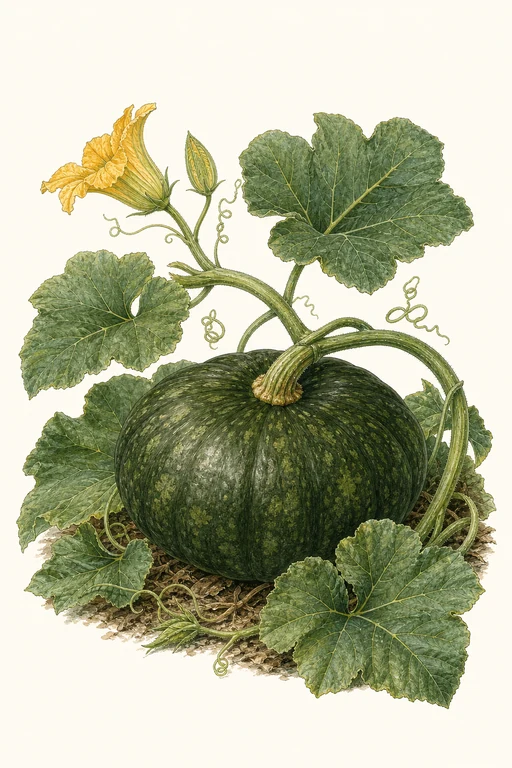
The rind is a handsome, flattened kabocha shape in warm green to deep forest-green, often with subtle mottling that promises a long, satisfying season. Grow Winter Sweet for hearty roasting and comforting purées, or for spoonable wedges that shine in savory sauces and slow-simmered dishes all winter long.
Light: Full SunMaturity: 95 DaysHabit: Vine
Planting schedules and alerts are optimized for Columbus (Zone 6b).
Crop Dates
| Milestone | Date |
|---|---|
| Start Indoors | Apr 11th |
| Last Frost | Apr 25th |
| Transplant / Sow Outdoors | Apr 25th |
| Harvest Begins | Jul 29th |
| Harvest Ends | Oct 16th |
Crop Details
| Trait | Value |
|---|---|
| Days to Maturity | 95 |
| Sun Requirements | Full Sun |
| Growth Habit | Vine |
| Support Needed | Trellis |
| Planting Depth | Normal |
| Germination Temp (°F) | 75 |
| Min Soil Temp (°F) | 65 |
| Min Night Temp (°F) | 55 |
| Harden Off (days) | 12 |
Culinary Notes

Chef's Note
Winter Sweet’s fine-grain flesh cooks down into an almost custard-like cream, so it works especially well when you want body without graininess. It’s built for roasting and purées, where its mellow sweetness and roast aroma stay coherent instead of turning bland under too much tang.

Best Uses
- roasted wedges with caramelized edges and silky interiors
- smooth purée or soup base that turns buttery without needing heavy starch
- slow-simmered stews/curries where it thickens the broth
- spoonable gratins or pasta sauces that cling instead of going watery

Flavor Profile

Frequently Asked Questions
What pest or disease is most likely on Cucurbita maxima (winter squash) and how do I control it?
How often should I water Cucurbita maxima during the main growing phase (vining and fruit set)?
How can I tell when Cucurbita maxima winter sweet is ready to harvest?
Sowing Tips

Transplant Conditions
Wait until soil reaches 65°F and nights stay above 55°F before moving outdoors. Harden off for 12 days first.

Direct Sow Preferred
Sensitive roots — does not transplant well. If starting indoors, use biodegradable pots and disturb roots as little as possible when moving outdoors.
Expert Note

For best storage and flavor, grow in full sun and let the rind fully harden before harvest, then cure warm for 7–10 days.