
Yadkin Valley Red
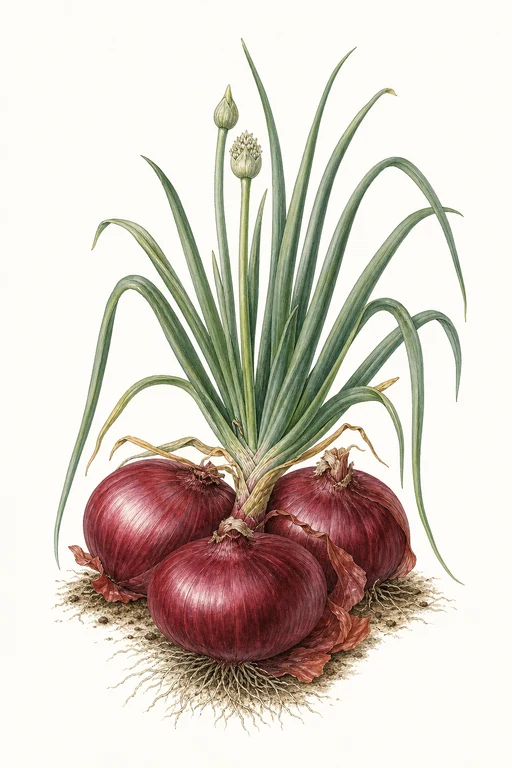
Sweetly pungent and richly red from shoulder to stem, Yadkin Valley Red forms handsome, globe-leaning bulbs with a satiny skin that deepens to garnet as it matures.
The flesh is crisp and juicy, balancing mild sweetness with a savory edge—ideal for bold, colorful roasts, caramelizing, and vibrant fresh slices in salads, as well as striking color in sauces and pickles.
Light: Full SunMaturity: 120 DaysHabit: Bulbing
Crop Dates : 2a
| Milestone | Date |
|---|---|
| Last Frost | May 25th |
| Growing Approach | Protected Environment Only |
Crop Details
| Trait | Value |
|---|---|
| Days to Maturity | 120 |
| Sun Requirements | Full Sun |
| Growth Habit | Bulbing |
| Support Needed | None |
| Planting Depth | Normal |
| Germination Temp (°F) | 70 |
| Min Soil Temp (°F) | 45 |
| Min Night Temp (°F) | 28 |
| Harden Off (days) | Not Required |
Culinary Notes

Chef's Note
This red onion earns its place with a clean sweet-pungent start and a juicy crunch that cooks down into glossy, garnet-stained sweetness. It caramelizes reliably without turning dull, so you can go from raw razor-thin slices to deep-roasted edges and still taste the onion character.

Best Uses
- caramelize for jammy, dark-red jam-like onions
- slow-roast whole or in wedges until sweet and silky at the edges
- raw shave for crisp, high-impact slices with citrusy dressings
- quick-pickle for sharp color and snap that cuts fatty meats

Flavor Profile

Frequently Asked Questions
How do I manage onion (Allium cepa) downy mildew or purple blotch if my plants get leaf spots in humid weather?
How often should I water Allium cepa during the main bulb-growing phase?
When are Allium cepa bulbs ready to harvest, and how can I tell?
Sowing Tips

Transplant Conditions
Wait until soil reaches 45°F and nights stay above 28°F before moving outdoors.
Expert Note

Plant multiplier (potato) onions as soon as soil is workable so the new bulbs form before peak summer heat.