
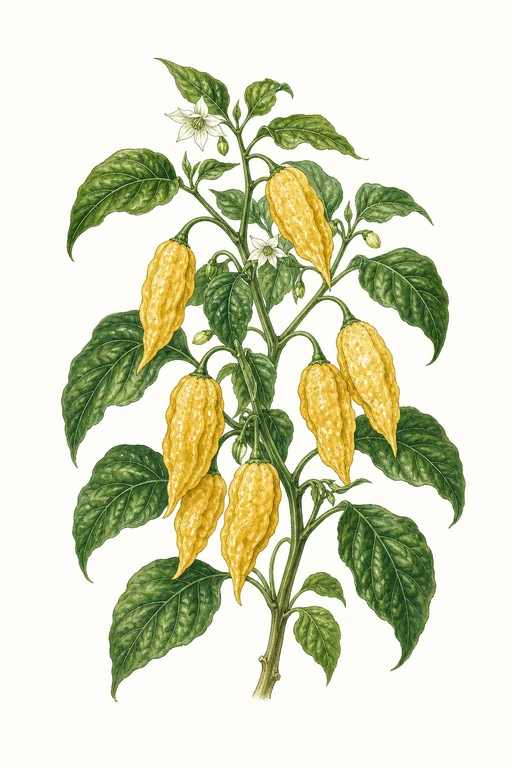
Yellow Bhut Jolokia
Sunlit and unmistakable, Yellow Bhut Jolokia ripens to a glowing golden-yellow that feels almost luminous against the foliage.
Expect a fierce, lingering heat with a bright, peppery bite—crisp-fresh at first contact, then warming into a bold, smoky intensity. Grow it for standout superhot flavor in fiery sauces, bold salsas, and small-batch pickles, or to dry and grind for heat that truly carries.
Light: Full SunMaturity: 95 DaysHabit: Upright
Crop Dates : 8a
| Milestone | Date |
|---|---|
| Start Indoors | Feb 4th |
| Last Frost | Apr 1st |
| Transplant / Sow Outdoors | May 27th |
| Harvest Begins | Aug 30th |
| Harvest Ends | Nov 5th |
Crop Details
| Trait | Value |
|---|---|
| Days to Maturity | 95 |
| Sun Requirements | Full Sun |
| Growth Habit | Upright |
| Support Needed | Stake |
| Planting Depth | Normal |
| Germination Temp (°F) | 80 |
| Min Soil Temp (°F) | 60 |
| Min Night Temp (°F) | 50 |
| Harden Off (days) | 10 |
Culinary Notes

Chef's Note
Yellow Bhut Jolokia hits crisp and peppery first, then stretches into a lingering, smoky burn—exactly the kind of superhot that improves with a little acid or reduction. For sauces and pickles, treat it like firepower: balance the bite with lime/vinegar and let it work rather than overpower.

Best Uses
- fiery hot sauces (blend smooth, then simmer to mellow the burn)
- small-batch salsas where it stays bright, not cooked to death
- quick pickling for a sharp heat spike with tangy bite
- drying and grinding for superhot heat that disperses evenly in rubs and marinades

Flavor Profile

Kitchen Pairings
Frequently Asked Questions
What’s a common disease or pest issue on Capsicum chinense (yellow Bhut Jolokia), and how do I stop it?
How often should I water yellow Bhut Jolokia during the main growing phase?
How can I tell when yellow Bhut Jolokia is ready to harvest?
Sowing Tips

Transplant Conditions
Wait until soil reaches 60°F and nights stay above 50°F before moving outdoors. Harden off for 10 days first.
Expert Note

For superhots like this, prioritize warm soil (60°F+) and consistent moisture—cold snaps during establishment are the biggest yield killer.