
Yellow Chard
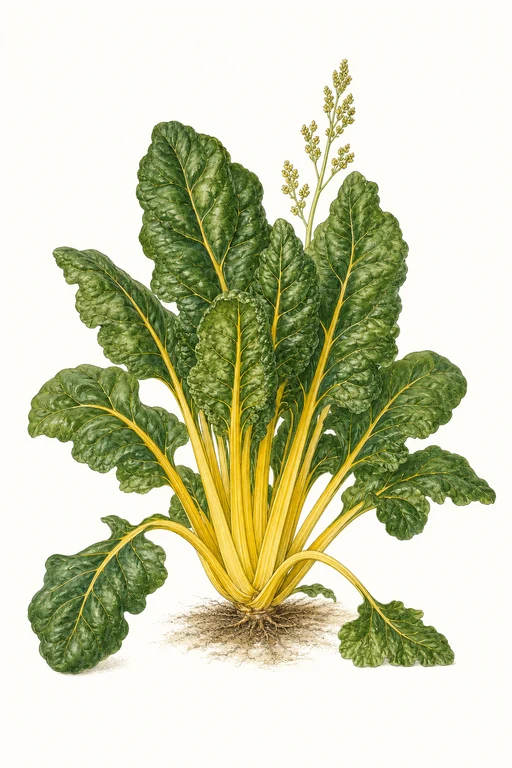
Sunlit and richly flavored, Yellow Chard brings a golden glow to the garden with tender leaves and crisp, buttery-yellow stems that feel succulent and bright.
At maturity in about 50 days, the foliage forms an upright clump with a succulent bite and a mild, earthy sweetness that shines in fresh salads, quick sautéed greens, and silky sauces. Grow it for its vivid color that holds beautifully through the season—an elegant, edible centerpiece from first harvest to the last.
Light: Full SunMaturity: 50 DaysHabit: Rosette
Planting schedules and alerts are optimized for Columbus (Zone 6b).
Crop Dates
| Milestone | Date |
|---|---|
| Start Indoors | Mar 28th |
| Last Frost | Apr 25th |
| Transplant / Sow Outdoors | Apr 25th |
| Harvest Begins | Jun 14th |
| Harvest Ends | Oct 16th |
Crop Details
| Trait | Value |
|---|---|
| Days to Maturity | 50 |
| Sun Requirements | Full Sun |
| Growth Habit | Rosette |
| Support Needed | None |
| Planting Depth | Normal |
| Germination Temp (°F) | 70 |
| Min Soil Temp (°F) | 40 |
| Min Night Temp (°F) | 35 |
| Harden Off (days) | 6 |
Culinary Notes

Chef's Note
Yellow chard earns its place because it cooks up buttery without turning bitter—its stems stay pleasantly crisp while the leaves go silky. Use heat briefly and finish bright (lemon or a dairy fat) so the golden color and mild sweetness come forward.

Best Uses
- quick sauté with a splash of lemon and a knob of butter for glossy stems
- blanch-and-chill for bright, fork-tender salad greens
- braise briefly then finish with a creamy sauce
- silky purée/sauce base where the greens stay vivid rather than dull

Flavor Profile

Kitchen Pairings
Frequently Asked Questions
What pests or diseases commonly hit yellow chard (Beta vulgaris var. cicla), and how can I treat them?
How often should I water yellow chard during its main growing phase, and what soil moisture level should I maintain?
How do I know when yellow chard (Beta vulgaris var. cicla) is ready to harvest?
Sowing Tips

Transplant Conditions
Wait until soil reaches 40°F and nights stay above 35°F before moving outdoors. Harden off for 6 days first.
Expert Note

For sweetest flavor, harvest yellow chard leaves while young and keep soil consistently moist to prevent bitterness.