
Zamboni
Tender, peppery florets and glossy leaves arrive in a quick 45-day rhythm, with a vivid green that feels almost luminous in the garden.
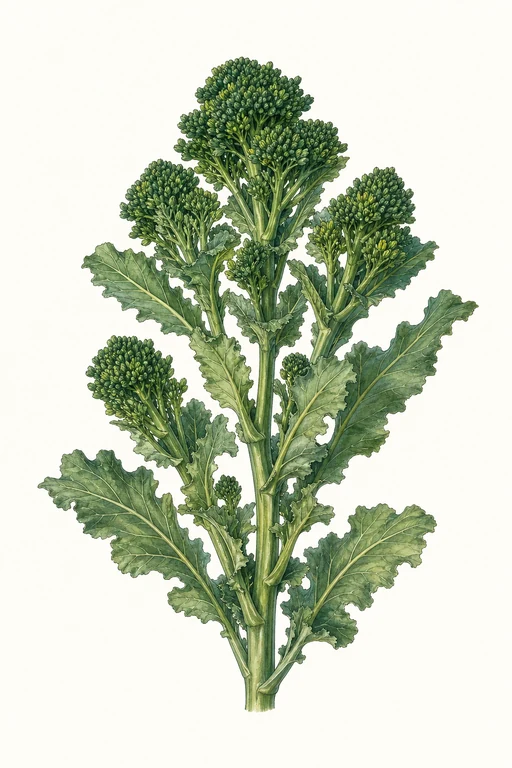
Zamboni’s raab forms compact, upright heads that stay pleasantly crisp, offering a lively bite and a gentle sweetness as the plants mature. Ideal for stir-fries, sautéing, and robust sauces, it also shines in quick pickles where its bright, crucifer character can really stand up to bold flavors.
Light: Full SunMaturity: 45 DaysHabit: Rosette
Planting schedules and alerts are optimized for Columbus (Zone 6b).
Crop Dates
| Milestone | Date |
|---|---|
| Start Indoors | Mar 28th |
| Last Frost | Apr 25th |
| Transplant / Sow Outdoors | Apr 25th |
| Harvest Begins | Jun 9th |
| Harvest Ends | Oct 16th |
Crop Details
| Trait | Value |
|---|---|
| Days to Maturity | 45 |
| Sun Requirements | Full Sun |
| Growth Habit | Rosette |
| Support Needed | None |
| Planting Depth | Normal |
| Germination Temp (°F) | 40 |
| Min Soil Temp (°F) | 45 |
| Min Night Temp (°F) | 35 |
| Harden Off (days) | 6 |
Culinary Notes

Chef's Note
Zamboni raab is built for speed: the florets and leaves hold a clean, crisp bite in a hot pan while its peppery brassica character sweetens just enough to feel round. Use it like the world’s quickest green—toss it off heat with acid or salt, or let it go tangy in a quick pickle for crunchy, vivid contrast.

Best Uses
- hot skillet sauté with a splash of lemon to keep it snappy
- stir-fry where it stays upright and crisp instead of melting
- robust pasta agitation: wilt fast, then toss for a glossy coating
- quick pickles for sharp, briny crucifer crunch

Flavor Profile

Kitchen Pairings
Frequently Asked Questions
What pest or disease problem is most common on Brassica rapa var. ruvo (Zamboni) and how do I control it?
How often should I water Zamboni during its main growing phase (around weeks 2–6)?
How can I tell when Zamboni (Brassica rapa var. ruvo) is ready to harvest?
Sowing Tips

Transplant Conditions
Wait until soil reaches 45°F and nights stay above 35°F before moving outdoors. Harden off for 6 days first.
Expert Note

For best tenderness, harvest broccoli raab stems and buds frequently before they elongate and flower, especially as temperatures rise.