
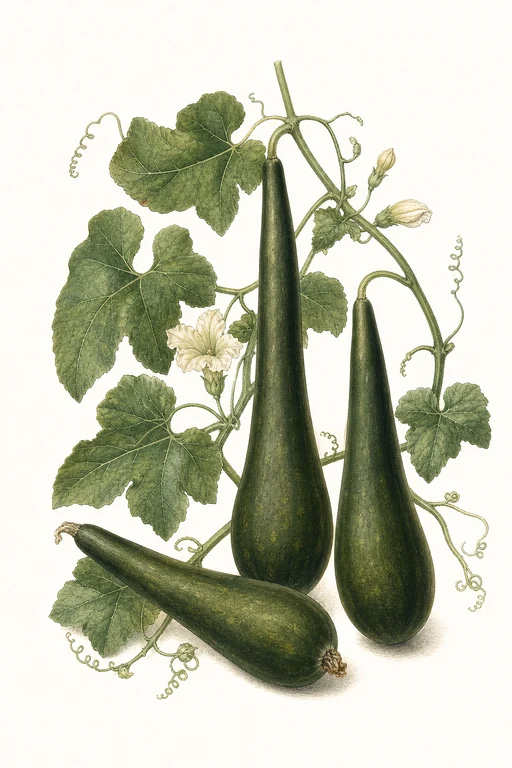
Zucca Da Pergola
Fragrant, sun-warmed flesh inside the long, elegant Zucca Da Pergola bottle gourds turns tender and mellow with a gentle sweetness—ideal for slow-roasted depth and comforting spoonfuls.
The skin is firm and resilient, with a graceful silhouette that makes storage and pantry-ready use a delight, while the interior offers a fine, custardy texture when cooked down into hearty preparations. Grow this vigorous, warm-season viner for a harvest that feels both ornamental and richly useful—perfect for home gardeners who love winter squash character with a refined, elongated form.
Light: Full SunMaturity: 85 DaysHabit: Vine
Planting schedules and alerts are optimized for Columbus (Zone 6b).
Crop Dates
| Milestone | Date |
|---|---|
| Start Indoors | Apr 11th |
| Last Frost | Apr 25th |
| Transplant / Sow Outdoors | Apr 25th |
| Harvest Begins | Jul 19th |
| Harvest Ends | Oct 16th |
Crop Details
| Trait | Value |
|---|---|
| Days to Maturity | 85 |
| Sun Requirements | Full Sun |
| Growth Habit | Vine |
| Support Needed | Trellis |
| Planting Depth | Normal |
| Germination Temp (°F) | 75 |
| Min Soil Temp (°F) | 70 |
| Min Night Temp (°F) | 55 |
| Harden Off (days) | 12 |
Culinary Notes

Chef's Note
Zucca Da Pergola leans fragrant and mellow—when roasted or simmered, the interior goes custardy instead of watery, so it behaves beautifully in thick soups and spoonable purees. Treat the skin as resilient packaging rather than a crunchy feature; the real work is the silky center that takes aromatics and fat like a warm blanket.

Best Uses
- slow-roasted wedges until the flesh turns custardy
- thick spoonable soups and velouté-style purees
- braises where it absorbs aromatics without turning stringy
- stuffed halves baked until tender throughout

Flavor Profile

Frequently Asked Questions
What’s the most common problem for Lagenaria siceraria (zucca da pergola) and how do I fix it?
How often should I water Lagenaria siceraria during its main growing phase?
How can I tell when zucca da pergola (Lagenaria siceraria) is ready to harvest?
Sowing Tips

Transplant Conditions
Wait until soil reaches 70°F and nights stay above 55°F before moving outdoors. Harden off for 12 days first.

Direct Sow Preferred
Sensitive roots — does not transplant well. If starting indoors, use biodegradable pots and disturb roots as little as possible when moving outdoors.
Expert Note

Bottle gourd is highly frost-sensitive—transplant only after nights are reliably warm and protect the plants from cold snaps to prevent stunting.