
Carnation
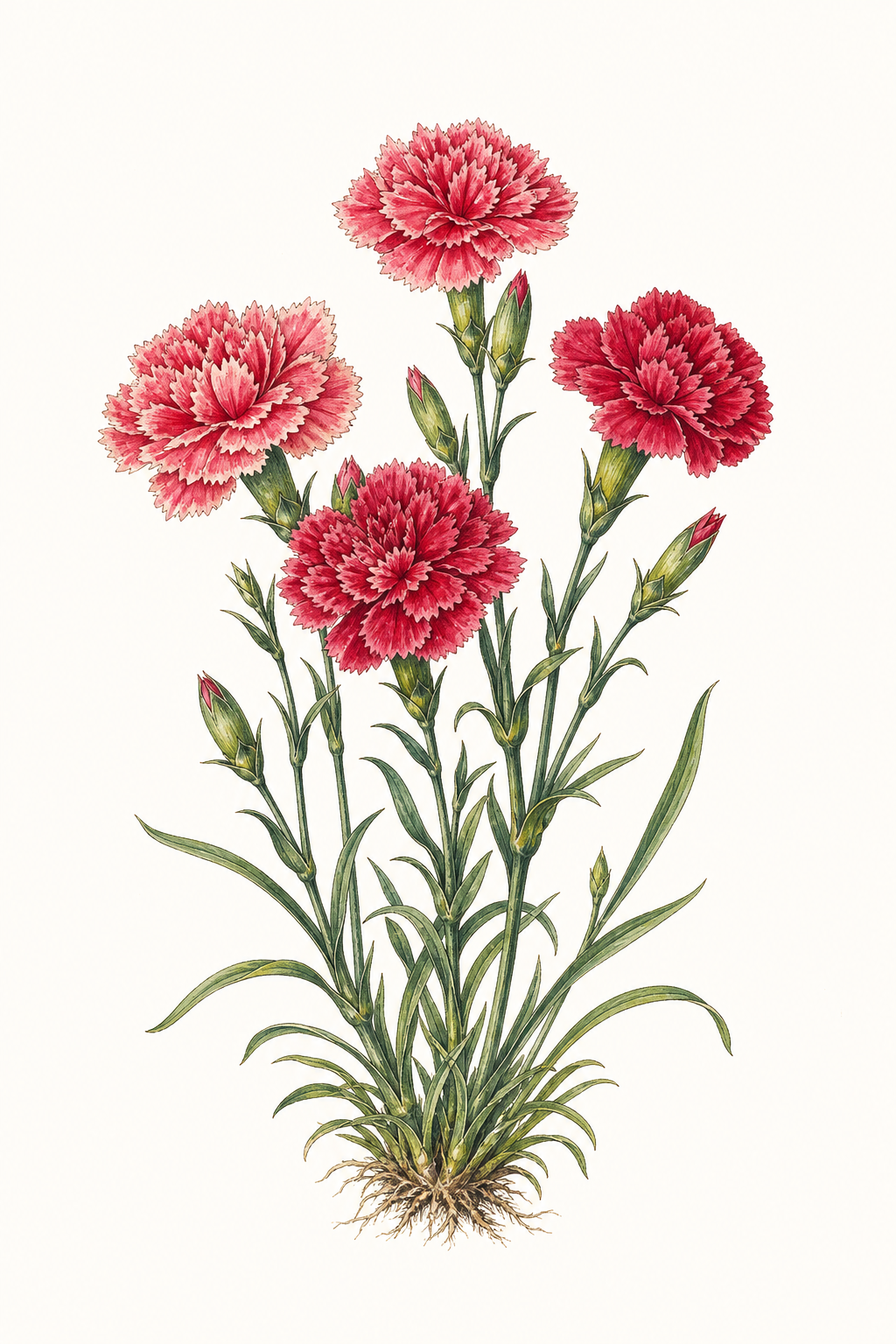
Fragrant, ruffled blooms unfurl in a lush garden show—each Carnation head a velvety cascade of petals that catches light like sat…
Crop Dates
| Milestone | Date |
|---|---|
| Start Indoors | Dec 5th |
| Last Frost | Jan 16th |
| Transplant / Sow Outdoors | Jan 16th |
| Harvest Begins | Mar 27th |
| Harvest Ends | Dec 19th |
Crop Details
| Trait | Value |
|---|---|
| Days to Maturity | 70 |
| Sun Requirements | Full Sun |
| Growth Habit | Upright |
| Support Needed | None |
| Planting Depth | Normal |
| Germination Temp (°F) | 60 |
| Min Soil Temp (°F) | 45 |
| Min Night Temp (°F) | 35 |
| Harden Off (days) | 7 |
Recommended Companions
Frequently Asked Questions
What pest or disease is most common on Dianthus caryophyllus (carnation), and how do I manage it?
How often should I water carnations (Dianthus caryophyllus) during active growth?
How can I tell when Dianthus caryophyllus carnations are ready to harvest?
Fragrant, ruffled blooms unfurl in a lush garden show—each Carnation head a velvety cascade of petals that catches light like satin. Expect richly textured flowers with a full, layered form, ideal for long-lasting color in the landscape and for arranging in bouquets. Grow Carnation for a classic garden centerpiece that perfumes the air and brings enduring beauty from bud to bloom.
Sowing Tips

Transplant Conditions
Wait until soil reaches 45°F and nights stay above 35°F before moving outdoors. Harden off for 7 days first.
Expert Note

For carnations, prioritize sharp drainage and full sun, and deadhead regularly to keep the bloom cycle going.