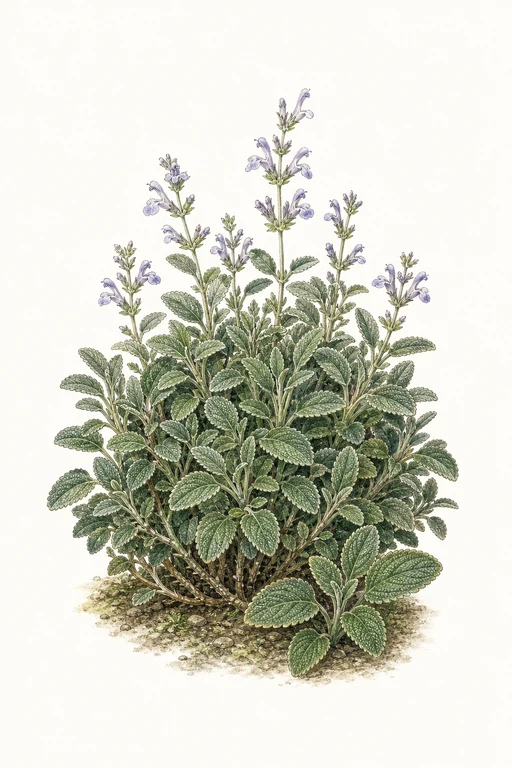
Dwarf Garden Sage
Sage
🌱 90d to harvest
Bush
Breathe in the silvery, velvety leaves of Dwarf Garden Sage—an aromatic cushion of cool, resinous fragrance with a softly peppery…
Crop Dates
| Milestone | Date |
|---|---|
| Start Indoors | Dec 5th |
| Last Frost | Jan 16th |
| Transplant / Sow Outdoors | Jan 16th |
| Harvest Begins | Apr 16th |
| Harvest Ends | Dec 19th |
Crop Details
| Trait | Value |
|---|---|
| Days to Maturity | 90 |
| Sun Requirements | Full Sun |
| Growth Habit | Bush |
| Support Needed | None |
| Planting Depth | Normal |
| Germination Temp (°F) | 70 |
| Min Soil Temp (°F) | 45 |
| Min Night Temp (°F) | 50 |
| Harden Off (days) | 7 |
Recommended Companions
Frequently Asked Questions
What pests or diseases commonly affect Salvia officinalis (dwarf garden sage), and how do I treat them at home?
Sage often develops powdery mildew and root rot in cool, humid conditions or when the soil stays wet. Improve airflow with wider spacing, water at the base, and let the top 1–2 in (2–5 cm) of soil dry between waterings; remove badly affected leaves and discard them. If mildew shows up, treat early with a label-approved horticultural fungicide and keep plants in full sun to dry foliage quickly.
How often should I water Salvia officinalis during its main growing phase, and what soil moisture level should I aim for?
During active growth, water deeply only when the top inch (2–3 cm) of soil is dry, aiming for evenly moist but not soggy soil. Once established, dwarf garden sage is drought-tolerant, so frequent light watering usually causes weak roots and more disease risk. In containers, check moisture more often—water until excess drains, then wait for that top inch to dry again.
How can I tell when Salvia officinalis is ready to harvest (for best flavor)?
Harvest once plants are at least 8–10 inches (20–25 cm) tall and produce plenty of fresh, mature leaves, typically around 70–90 days from sowing. Pick in the morning when leaves are turgid, choosing stems with firm, fully colored leaves and avoiding cutting into very young tips right after hard growth begins. For the best flavor, harvest before flowering starts; when buds appear, leaves can become more bitter and tougher.