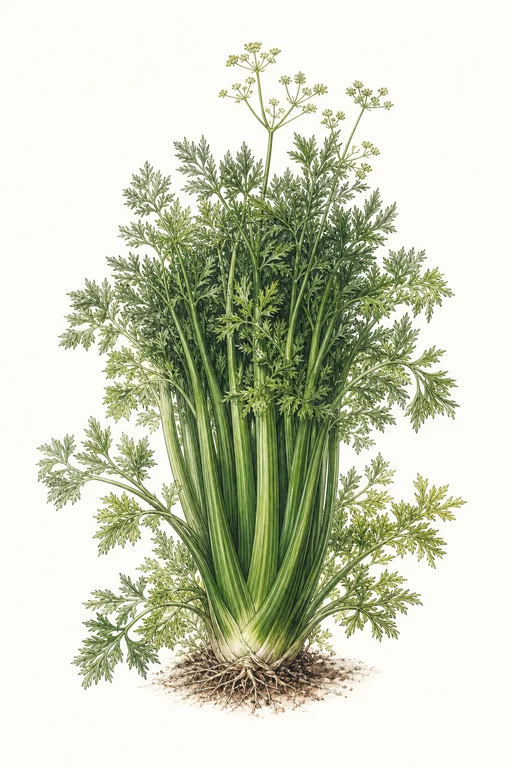
French Dinant
Celery
🌱 75d to harvest
Rosette
Unfurl French Dinant’s crisp, cool snap in the garden—an alluring celery with a clean, bright fragrance and a tender, succulent b…
Crop Dates
| Milestone | Date |
|---|---|
| Start Indoors | Nov 7th |
| Last Frost | Jan 16th |
| Transplant / Sow Outdoors | Jan 9th |
| Harvest Begins | Mar 25th |
| Harvest Ends | Dec 19th |
Crop Details
| Trait | Value |
|---|---|
| Days to Maturity | 75 |
| Sun Requirements | Part Sun |
| Growth Habit | Rosette |
| Support Needed | None |
| Planting Depth | Normal |
| Germination Temp (°F) | 70 |
| Min Soil Temp (°F) | 40 |
| Min Night Temp (°F) | 28 |
| Harden Off (days) | 7 |
Recommended Companions
Frequently Asked Questions
What pest or disease commonly affects Apium graveolens var. dulce (French Dinant celery), and how do I control it at home?
Celery (Apium graveolens var. dulce) commonly suffers from early blight and leaf spot diseases, which show up as brown/gray specks or expanding spots on leaves. Remove and discard affected leaves, avoid wetting foliage when watering, and improve airflow by thinning plants to the spacing on your seed packet. If spots keep spreading, use a labeled fungicide for leafy vegetables and reapply according to the label after rains or heavy dews.
How often should I water French Dinant celery during the main growing phase to keep soil moisture right?
During active growth, keep the soil consistently moist but not waterlogged—about 1–1.5 inches of water per week, adjusted for heat and rainfall. Water deeply 1–2 times per week rather than frequent light sprinkles, and aim for steady moisture until the plants are mature (roughly through the 75-day period). Mulch helps prevent the dry-out/wilt cycle that can stunt celery and make stalks tougher.
How can I tell when French Dinant celery is ready to harvest?
Harvest when the stalks feel firm and reach the expected size for your seed/planting schedule, typically around 75 days from transplanting or sowing (as your packet specifies). Look for fully developed, well-formed inner stalks with crisp leaves and a strong celery scent—avoid waiting until stalks start to look fibrous or hollow. If you need a staggered harvest, cut individual stalks at the base instead of uprooting the whole plant.