Watermelon Radish
Radish
🌱 45d to harvest
Taproot
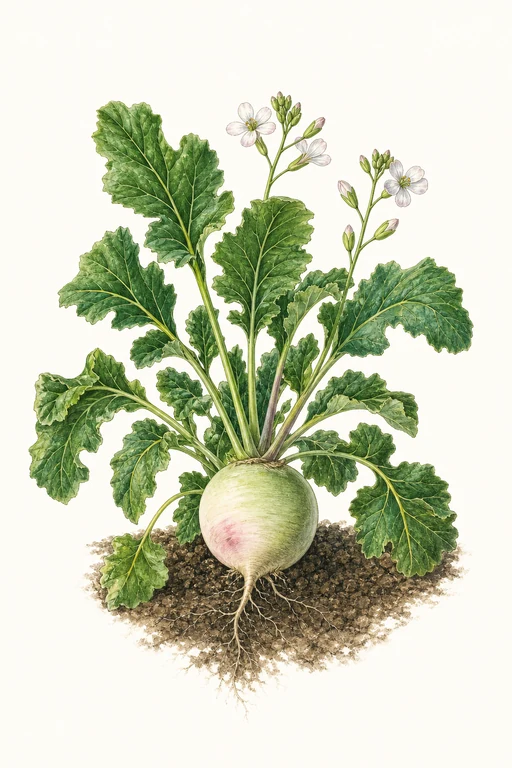
Sink your spoon into a jewel-bright slice of Watermelon Radish—crisp, juicy flesh that blooms from a vivid white edge into a rosy…
Crop Dates
| Milestone | Date |
|---|---|
| Start Indoors | Direct Sow |
| Last Frost | Jan 16th |
| Transplant / Sow Outdoors | Jan 16th |
| Harvest Begins | Mar 2nd |
| Harvest Ends | Dec 19th |
Crop Details
| Trait | Value |
|---|---|
| Days to Maturity | 45 |
| Sun Requirements | Full Sun |
| Growth Habit | Taproot |
| Support Needed | None |
| Planting Depth | Normal |
| Germination Temp (°F) | 55 |
| Min Soil Temp (°F) | 40 |
| Min Night Temp (°F) | 28 |
| Harden Off (days) | Not Required |
Recommended Companions
Frequently Asked Questions
What pest or disease most commonly hits Raphanus sativus (watermelon radish), and what can I do?
Cabbage loopers and aphids are common on Brassicaceae radishes, and downy mildew or powdery mildew can show up in humid weather. Check the underside of leaves every 2–3 days and hand-pick loopers; for infestations, spray insecticidal soap in the evening and repeat every 5–7 days as needed. For mildew, thin for airflow and water at soil level (not foliage), then remove heavily affected leaves to slow spread.
How often should I water watermelon radish during its main growing phase?
During the 3–5 weeks of root bulking, keep soil evenly moist but not soggy—aim for dampness in the top 2–3 in (5–7 cm) at all times. Water about 1 inch (2.5 cm) per week total, split into 2–3 sessions in hot weather, and reduce slightly if rain keeps the topsoil moist to prevent splitting or woody roots. Inconsistent moisture is a major trigger for pithiness in Raphanus sativus, so avoid letting the bed dry out between waterings.
How do I tell when watermelon radish is ready to harvest?
Harvest at about 45 days from sowing, when the roots are fully enlarged and the outside skin looks firm and well-colored. Use gentle pressure at the soil line—if the bulb feels solid and about the expected size for your seed packet, pull a test radish and cut it open to confirm the crisp, vividly colored flesh. If left too long, Raphanus sativus can become pithy and hotter in flavor.