
White Bhut Jolokia
Pepper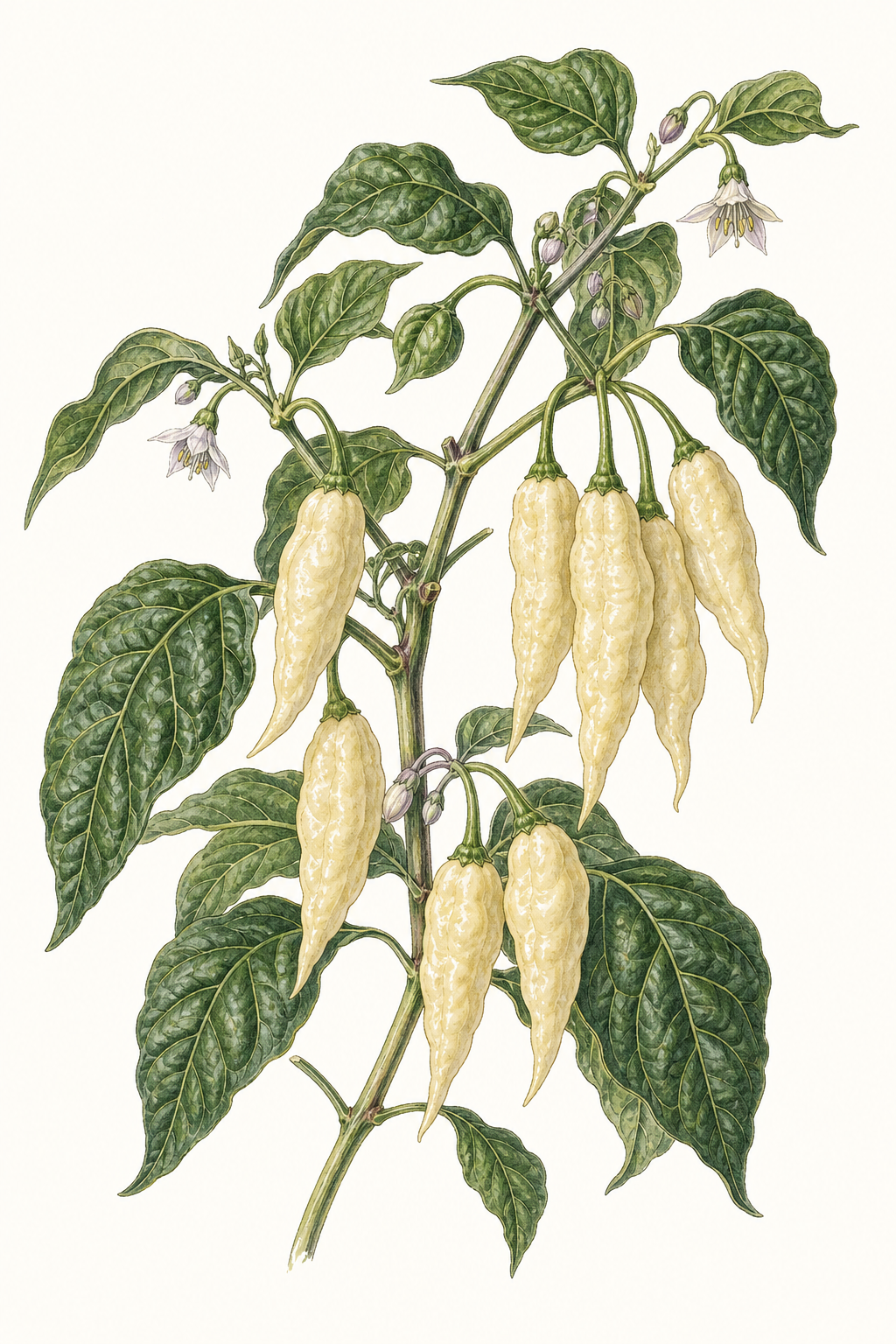
A luminous, ghost-white pepper that ripens to a soft, pearly glow—White Bhut Jolokia brings an intense, lingering heat with a bri…
Crop Dates
| Milestone | Date |
|---|---|
| Start Indoors | Nov 21st |
| Last Frost | Jan 16th |
| Transplant / Sow Outdoors | Mar 13th |
| Harvest Begins | Jun 16th |
| Harvest Ends | Dec 19th |
Crop Details
| Trait | Value |
|---|---|
| Days to Maturity | 95 |
| Sun Requirements | Full Sun |
| Growth Habit | Bush |
| Support Needed | Stake |
| Planting Depth | Normal |
| Germination Temp (°F) | 80 |
| Min Soil Temp (°F) | 60 |
| Min Night Temp (°F) | 50 |
| Harden Off (days) | 10 |
Recommended Companions
Frequently Asked Questions
What’s the most common pest or disease problem for Capsicum chinense (White Bhut Jolokia), and how do I fix it fast?
How often should I water White Bhut Jolokia during the main growing phase (after it flowers)?
How can I tell when White Bhut Jolokia is ready to harvest?
A luminous, ghost-white pepper that ripens to a soft, pearly glow—White Bhut Jolokia brings an intense, lingering heat with a bright, peppery bite and a crisp, juicy snap. At maturity (about 95 days), the slender pods hang in dramatic clusters, their smooth skin and tapered shape making them as striking in the garden as they are potent on the plant. Grow for bold flavor-forward superhot peppers that shine in fiery salsas, hot sauces, and pickled preparations where you want heat with a clean, vivid character.
Sowing Tips

Transplant Conditions
Wait until soil reaches 60°F and nights stay above 50°F before moving outdoors. Harden off for 10 days first.
Expert Note

For superhots like this, keep seedlings warm (steady temps and bright light) and transplant only when soil is reliably 60°F+ to avoid a long, stunted start.