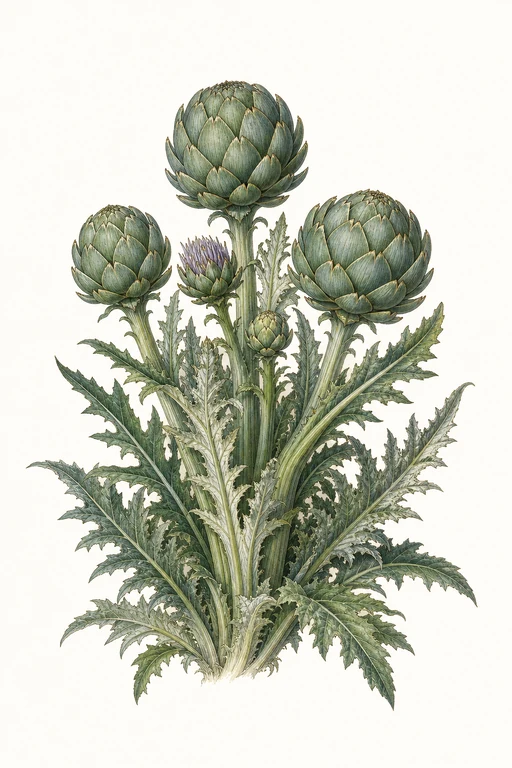
Catanese
Artichoke
🌱 120d to harvest
Clumping
Unfurling from tight, armor-like bracts, Catanese artichokes offer a richly nutty, subtly sweet flavor with a tender, meaty heart…
Crop Dates
| Milestone | Date |
|---|---|
| Start Indoors | Oct 23rd |
| Last Frost | Jan 1st |
| Transplant / Sow Outdoors | Feb 26th |
| Harvest Begins | Jun 26th |
| Harvest Ends | Dec 31st |
Crop Details
| Trait | Value |
|---|---|
| Days to Maturity | 120 |
| Sun Requirements | Full Sun |
| Growth Habit | Clumping |
| Support Needed | None |
| Planting Depth | Normal |
| Germination Temp (°F) | 70 |
| Min Soil Temp (°F) | 50 |
| Min Night Temp (°F) | 45 |
| Harden Off (days) | 10 |
Recommended Companions
Frequently Asked Questions
What’s the most common disease problem for globe artichoke (Cynara scolymus/Catanese), and how do I prevent and treat it?
One of the most common issues is crown rot (often from overly wet, poorly drained soil). Keep the crown above consistently damp ground, water at the soil line rather than the leaves, and remove any collapsed or blackened plant tissue early. If you see spreading rot, dig out the affected crown to protect nearby plants, and rotate beds because the pathogen can persist in the soil.
How often should I water Cynara scolymus during the main growing phase?
During active head and leaf growth, keep soil evenly moist but not waterlogged—aim for about 1–2 inches (2.5–5 cm) of water per week depending on heat and soil texture. Water deeply so moisture reaches the root zone, then let the top few centimeters dry slightly before watering again. Inconsistent soaking followed by drying stresses artichokes and can reduce head size.
How can I tell when Catanese (Cynara scolymus) is ready to harvest?
Harvest when the central bud is firm and the bracts are still tight, before the tips start to loosen or fray. For most plants, head size reaches market stage around 90–120 days; check daily during the final 2–3 weeks because heads can quickly move past peak. Cut the stem with a few inches below the bud to encourage side shoots for later smaller harvests.