Crosby Egyptian
50d to harvest
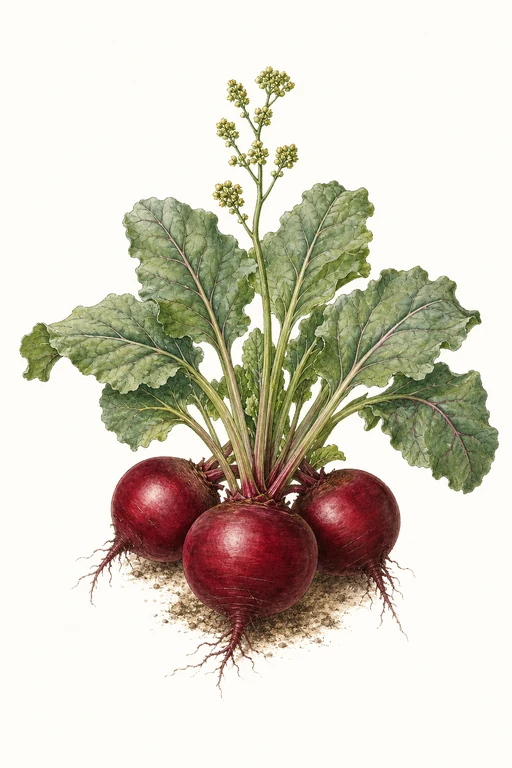
Sweetly earthy and richly crimson, Crosby Egyptian beets develop a velvety, tender texture with deep-red interiors that hold their color beautifully. Their compact, globe-shaped roots are wonderfully uniform at harvest, making them a joy to grow and a standout for vibrant color in every garden bounty. Grow Crosby Egyptian for reliable, early satisfaction—50 days to maturity—when you want bold red beets that shine in fresh salads, roasted platters, and striking pickled preserves.
Crop Dates
Growing note: In frost-free Zone 10b, grow this cool-season crop during the cooler dry season (October–February).
| Milestone | Date |
|---|---|
| Start Indoors | — |
| Climate | Frost-Free Climate |
| Transplant / Sow Outdoors | Oct 1st |
| Harvest Begins | Nov 20th |
| Harvest Ends | Feb 28th |
Crop Details
| Trait | Value |
|---|---|
| Days to Maturity | 50 |
| Sun Requirements | Full Sun |
| Growth Habit | Taproot |
| Support Needed | None |
| Planting Depth | Normal |
| Germination Temp (°F) | 55 |
| Min Soil Temp (°F) | 40 |
| Min Night Temp (°F) | 28 |
| Harden Off (days) | Not Required |
Recommended Companions
Frequently Asked Questions
What pest or disease commonly affects Beta vulgaris subsp. vulgaris (Crosby Egyptian) and how can I control it?
Beets often get Cercospora leaf spot, which shows up as brown spots with a pale gray center on older leaves and can cause leaf drop. Remove and discard infected leaves, water at the soil line (not on foliage), and improve airflow with proper spacing; if it’s severe, use a labeled copper-based fungicide and repeat according to the label. For future plantings, rotate beds so beets aren’t in the same spot each season.
How often should I water Crosby Egyptian beet during the main growing phase?
During the 6–8 weeks of bulking, keep the top 2–3 in (5–8 cm) of soil consistently moist but not soggy—aim for about 1 in (2.5 cm) of water per week, increasing slightly in hot weather. Water deeply, then allow the surface to dry slightly before watering again to prevent root disease and tough, fibrous roots. Mulch helps maintain steady moisture, which is key for tender roots.