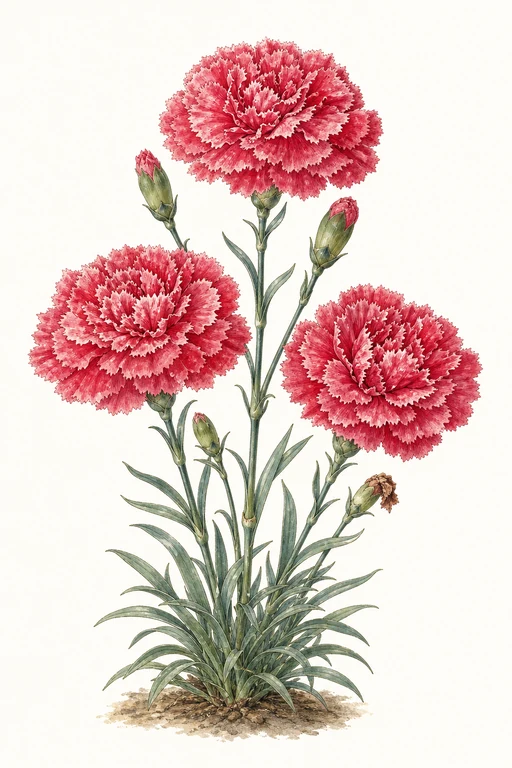
Giant Chabaud Enfant De Nice
Carnation
🌱 120d to harvest
Upright
Fragrant, ruffled blooms unfurl in abundance—each petal edged like fine lace, carrying a luminous glow that feels almost candleli…
Crop Dates
| Milestone | Date |
|---|---|
| Start Indoors | Oct 23rd |
| Last Frost | Jan 1st |
| Transplant / Sow Outdoors | Dec 25th |
| Harvest Begins | Apr 24th |
| Harvest Ends | Dec 31st |
Crop Details
| Trait | Value |
|---|---|
| Days to Maturity | 120 |
| Sun Requirements | Full Sun |
| Growth Habit | Upright |
| Support Needed | Stake |
| Planting Depth | Normal |
| Germination Temp (°F) | 65 |
| Min Soil Temp (°F) | 45 |
| Min Night Temp (°F) | 35 |
| Harden Off (days) | 7 |
Recommended Companions
Frequently Asked Questions
What’s the most common disease problem for Dianthus caryophyllus (carnations) like Giant Chabaud, and how do I prevent it?
A frequent issue is fungal leaf spot/botrytis (grey mold), especially when leaves stay wet and airflow is poor. Water at the soil line, avoid getting foliage wet, and remove any spotted or dead leaves promptly; space plants to keep the canopy open. If you see recurring spotting or grey growth, apply a labeled fungicide for ornamental carnations according to the label and improve air circulation immediately.
How often should I water Dianthus caryophyllus during peak growth (roughly weeks 4–10) to keep it healthy?
During active growth, keep the soil evenly moist but not soggy—aim for the top 1 inch to dry slightly between waterings. In typical home gardens this often works out to about 1–2 deep waterings per week, but adjust for heat and soil texture; sandy soils need more frequent deep soaking, heavy soils less. Mulch helps stabilize moisture, but never let mulch sit against the crown.
How can I tell when Giant Chabaud Enfant De Nice (Dianthus caryophyllus) is ready to harvest?
Harvest when flower buds are fully colored and just about to open—petals should be formed but not yet fully flared. For best vase quality, cut early in the morning and choose stems with firm buds (avoid blooms that are already past opening or browning at the edges). With carnations, continue harvesting regularly to encourage additional flowering until the plants decline with cold or heat stress.