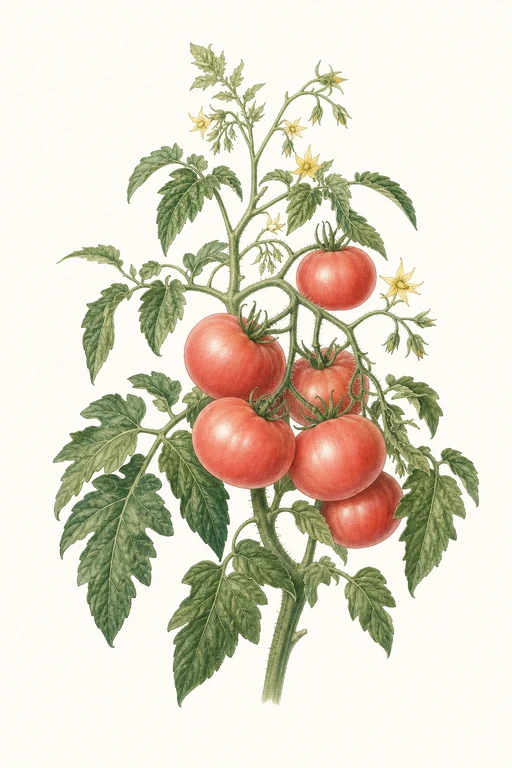
Glacier
60d to harvest
Cool, crisp flavor leads the way with Glacier’s bright, juicy slices—an inviting balance of tang and sweetness that tastes like fresh-picked clarity. The fruit forms a clean, slicing silhouette with a firm, succulent bite and a smooth, satin skin that holds its shape beautifully. Grow Glacier for standout garden-to-table performance in bold salads and vibrant fresh salsas, or for spoonable sauces that showcase its lively, garden-forward character.
Crop Dates
Growing note: Frost-free Zone 10b supports continuous outdoor production.
| Milestone | Date |
|---|---|
| Climate | Frost-Free Climate |
| Growing Approach | Continuous Production |
Crop Details
| Trait | Value |
|---|---|
| Days to Maturity | 60 |
| Sun Requirements | Full Sun |
| Growth Habit | Determinate |
| Support Needed | Cage |
| Planting Depth | Deep |
| Germination Temp (°F) | 75 |
| Min Soil Temp (°F) | 60 |
| Min Night Temp (°F) | 50 |
| Harden Off (days) | 7 |
Recommended Companions
Frequently Asked Questions
What pest or disease is most likely on Solanum lycopersicum (tomato) “Glacier,” and what should I do first?
Watch for early blight (Alternaria) and leaf spot, which show up as dark, target-like spots on older leaves and then spread upward. Remove and discard the infected lower leaves right away, and water at the soil line (not the foliage) to keep leaves dry. If it’s spreading despite cleanup, apply a labeled fungicide for tomatoes at the intervals on the label, especially during humid weather.
How often should I water Solanum lycopersicum during peak growth (from flowering through fruit set)?
Water deeply 1–2 times per week, aiming for consistently moist soil 1–2 inches down, not soggy. If hot days are frequent or containers dry quickly, you may need more frequent watering, but always check moisture first to avoid waterlogging. Uneven watering can trigger blossom-end rot and cracking, so keep the soil moisture steady once fruits are developing.