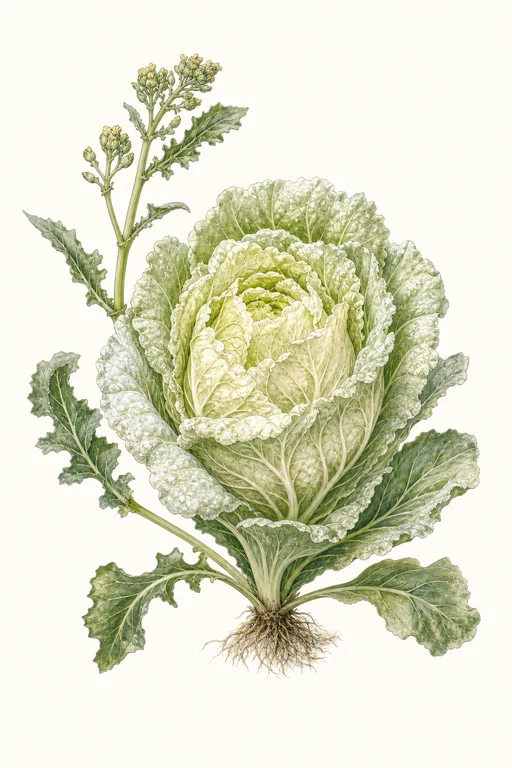
Ice Queen
Lettuce
🌱 75d to harvest
Rosette
Cool, crisp, and strikingly refreshing—Ice Queen forms tight, snow-white heads with a glassy crunch and a clean, delicate sweetne…
Crop Dates
| Milestone | Date |
|---|---|
| Start Indoors | Dec 4th |
| Last Frost | Jan 1st |
| Transplant / Sow Outdoors | Jan 1st |
| Harvest Begins | Mar 17th |
| Harvest Ends | Dec 31st |
Crop Details
| Trait | Value |
|---|---|
| Days to Maturity | 75 |
| Sun Requirements | Part Sun |
| Growth Habit | Rosette |
| Support Needed | None |
| Planting Depth | Surface |
| Germination Temp (°F) | 45 |
| Min Soil Temp (°F) | 40 |
| Min Night Temp (°F) | 35 |
| Harden Off (days) | 6 |
Recommended Companions
Frequently Asked Questions
What pest or disease most commonly hits Lactuca sativa (iceberg-type lettuce), and how can I treat it early?
Watch for aphids and slugs/snails on young Lactuca sativa, especially in warm, humid weather. Rinse aphids off with a strong spray and encourage lady beetles; for slugs, hand-pick at dusk and set copper tape or boards as barriers around beds. If you see gray, fuzzy mold on leaves (botrytis) or sudden leaf rot, remove affected leaves immediately and space plants to improve airflow so foliage dries quickly after watering.
How often should I water Lactuca sativa during the main growing phase, and what soil moisture level should I maintain?
During the ~60 days leading up to harvest (after seedlings establish), keep soil consistently moist but not waterlogged—aim for evenly damp soil to about 1 inch deep. Water in the morning, typically 2–3 times per week depending on heat, increasing frequency when leaves begin to droop or soil dries out quickly. Avoid letting the soil swing between very dry and very wet, because Lactuca sativa is prone to stress that can trigger bitter flavor and premature bolting.
How do I tell when Lactuca sativa is ready to harvest (75 days to maturity)?
Harvest when heads/rosettes feel firm for their size and outer leaves are fully expanded and crisp, usually around day 75. If you gently press the head and it gives a little instead of springing back firmly, it’s ready; if it feels loose, wait a bit. For best texture, harvest in the cool part of the day and cut at the base just above the soil line.