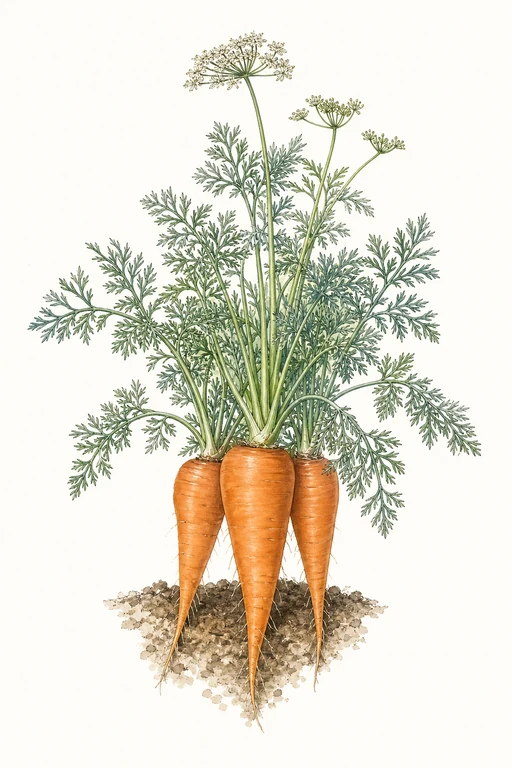
Kuroda Shantane
Carrot
🌱 75d to harvest
Taproot
Sweetly aromatic and richly colored, Kuroda Shantane carrots emerge with a deep, earthy orange that feels almost burnished in the…
Crop Dates
| Milestone | Date |
|---|---|
| Start Indoors | Direct Sow |
| Last Frost | Jan 1st |
| Transplant / Sow Outdoors | Jan 1st |
| Harvest Begins | Mar 17th |
| Harvest Ends | Dec 31st |
Crop Details
| Trait | Value |
|---|---|
| Days to Maturity | 75 |
| Sun Requirements | Full Sun |
| Growth Habit | Taproot |
| Support Needed | None |
| Planting Depth | Surface |
| Germination Temp (°F) | 55 |
| Min Soil Temp (°F) | 45 |
| Min Night Temp (°F) | 28 |
| Harden Off (days) | Not Required |
Recommended Companions
Frequently Asked Questions
What pest or disease most commonly affects Daucus carota (carrot) and how can I prevent it?
Carrot fly (Psila rosae) is a common pest that damages roots, causing tunneling and poor growth. Use fine row cover over the beds immediately after sowing (remove only during harvest) and keep weeds low; avoid moving soil from infested areas into clean beds. If you see patches of stunted plants, lift affected roots promptly to reduce spread and re-cover remaining plants while you monitor new adult activity.
How often should I water Daucus carota during the main growing phase to keep roots from cracking or becoming woody?
During the main root-forming period, keep the top 2–3 inches of soil consistently moist, typically watering 1–2 times per week depending on heat and soil type. After the seeds emerge, water in shorter, more frequent pulses so the soil doesn’t dry out completely between irrigations—carrots often crack when they cycle from very dry to very wet. Stop deep soaking right before harvest so the roots don’t split, while still preventing the bed from drying out entirely.
How do I tell when my Kuroda Shantane carrots are ready to harvest?
Start checking around day 70–75 for shoulder diameter; Kuroda Shantane is ready when the top of the root fills out to the intended size and the surface looks firm, not shriveled. Gently pull a sample carrot—if it slides out easily and the root is fully colored to the tip, you can harvest the rest. If tops grow large while roots stay thin, leave them a bit longer but don’t wait until they become overgrown and prone to pithiness.