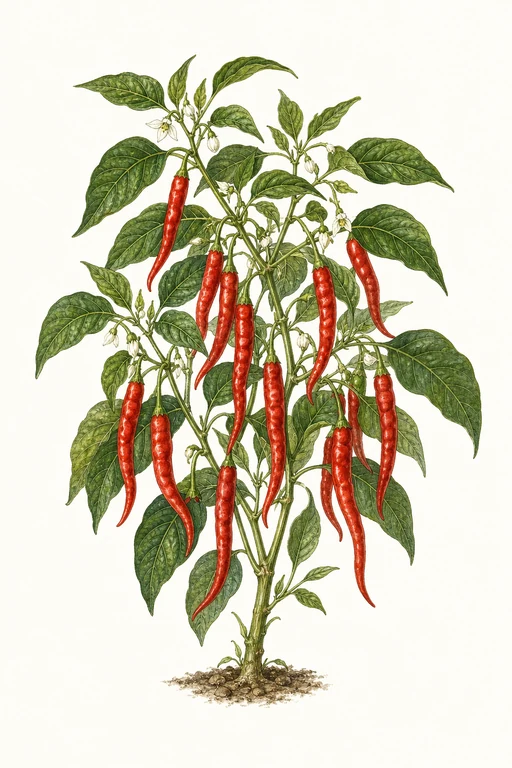
Mayan Love Pepper
75d to harvest
A slow-burning blaze with a bright, peppery snap—Mayan Love Pepper brings vivid heat in a slender, elegant form that’s as beautiful as it is spirited. At maturity, the fruits ripen from glossy green to warm red, with a smooth, taut skin and a crisp, juicy bite that shines in bold salsas and fiery sauces, and also stands up beautifully to pickling for long-lasting zing. Gardeners will love the steady harvest rhythm over the 75-day season, when each plant becomes a living ribbon of color and heat.
Crop Dates
Growing note: Frost-free Zone 10b supports continuous outdoor production.
| Milestone | Date |
|---|---|
| Climate | Frost-Free Climate |
| Growing Approach | Continuous Production |
Crop Details
| Trait | Value |
|---|---|
| Days to Maturity | 75 |
| Sun Requirements | Full Sun |
| Growth Habit | Upright |
| Support Needed | Stake |
| Planting Depth | Normal |
| Germination Temp (°F) | 80 |
| Min Soil Temp (°F) | 60 |
| Min Night Temp (°F) | 50 |
| Harden Off (days) | 10 |
Recommended Companions
Frequently Asked Questions
What pest or disease most often hits Capsicum annuum (Mayan Love Pepper) and how do I control it?
In home gardens, aphids and the diseases they spread (especially by transmitting viruses) can be the most damaging early on. Check the undersides of leaves weekly; blast aphids off with a strong water jet and release or apply insecticidal soap on affected foliage, repeating every 5–7 days until leaf growth stays clear. If plants develop mosaic-like leaf patterns or stunting, remove the affected pepper plants promptly to prevent virus spread to healthy Solanaceae.
How can I tell when Mayan Love Pepper is ready to harvest?
Harvest when pods reach their full length (about 70–75 days from transplant for this type) and have firm flesh with a glossy skin. Color is a strong indicator: pick when fruits have fully developed their intended red/yellow/orange color for sweetness (earlier for a sharper, greener pepper). If fruits come off the plant easily with a gentle twist, they’re typically ready; use pruners to avoid tearing stems.