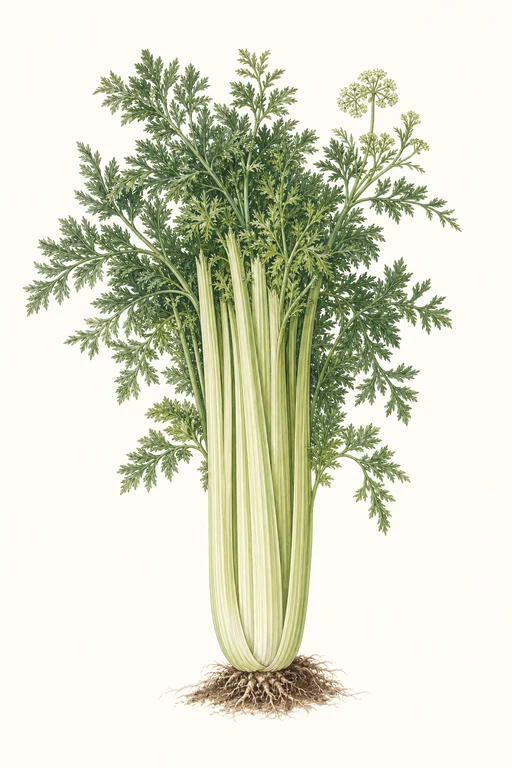
Peppermint Stick
85d to harvest
Crisp as a cool breeze, Peppermint Stick celery carries a uniquely refreshing, peppermint-leaning fragrance that rises from its tender stalks. Expect medium-tall, tightly blanched ribs with a clean crunch and a bright, herbaceous snap—ideal for elevating fresh salads, silky sauces, and aromatic soups where its cooling aroma can shine.
Crop Dates
Growing note: In frost-free Zone 10b, grow this cool-season crop during the cooler dry season (October–February).
| Milestone | Date |
|---|---|
| Start Indoors | — |
| Climate | Frost-Free Climate |
| Transplant / Sow Outdoors | Oct 1st |
| Harvest Begins | Dec 25th |
| Harvest Ends | Feb 28th |
Crop Details
| Trait | Value |
|---|---|
| Days to Maturity | 85 |
| Sun Requirements | Part Sun |
| Growth Habit | Rosette |
| Support Needed | None |
| Planting Depth | Normal |
| Germination Temp (°F) | 70 |
| Min Soil Temp (°F) | 45 |
| Min Night Temp (°F) | 35 |
| Harden Off (days) | 7 |
Recommended Companions
Frequently Asked Questions
What’s the most common disease problem for Apium graveolens var. dulce (Peppermint Stick celery) and how do I treat it?
Celery commonly suffers from early blight/fungal leaf spots (often worsened by wet foliage and poor airflow). Water at the soil line, avoid getting leaves wet, and remove badly spotted outer leaves; if spots spread quickly, spray an approved copper-based fungicide and repeat as directed on the label.
How often should I water Peppermint Stick celery during its main growth to prevent stress?
During the main growth period, keep the root zone evenly moist—about 1–2 inches (2.5–5 cm) of water per week, adjusted for heat and rainfall. Aim for consistently damp soil rather than cycles of drying and soaking, because drought stress can reduce leaf size and flavor.