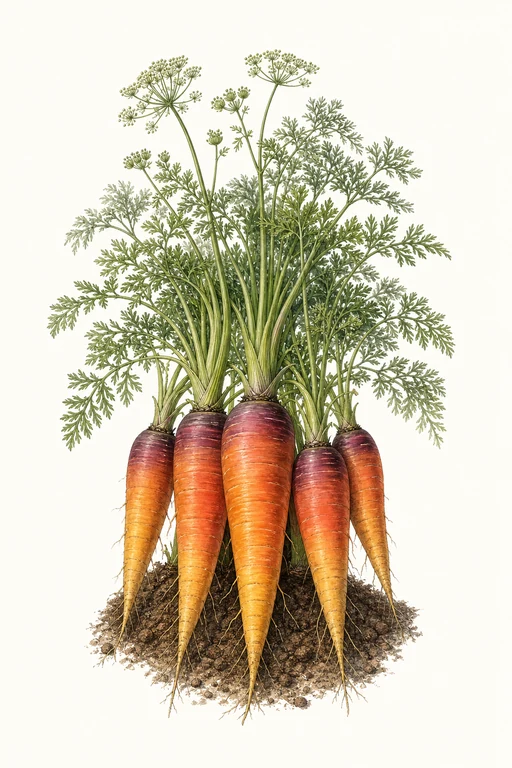
Rainbow
Carrot
🌱 70d to harvest
Rosette
Sweetly fragrant and sunlit in the bed, Rainbow Danvers Carrot delivers a vivid spectrum of color—warm orange cores with rosy-gol…
Crop Dates
| Milestone | Date |
|---|---|
| Start Indoors | Direct Sow |
| Last Frost | Jan 1st |
| Transplant / Sow Outdoors | Jan 1st |
| Harvest Begins | Mar 12th |
| Harvest Ends | Dec 31st |
Crop Details
| Trait | Value |
|---|---|
| Days to Maturity | 70 |
| Sun Requirements | Full Sun |
| Growth Habit | Rosette |
| Support Needed | None |
| Planting Depth | Normal |
| Germination Temp (°F) | 75 |
| Min Soil Temp (°F) | 45 |
| Min Night Temp (°F) | 28 |
| Harden Off (days) | Not Required |
Recommended Companions
Frequently Asked Questions
What pest or disease commonly affects Daucus carota (carrot), and how can I treat it at home?
Watch for carrot rust fly and the larvae that tunnel into roots, often showing as wilting tops and hollowed roots. Cover carrot beds with fine insect netting after sowing and keep weeds down; if you see damage, remove affected plants to reduce larvae and re-sow in a different spot next season. Carrot leaf spots and powdery mildew can also occur in humid weather—space plants for airflow and avoid wetting the foliage when irrigating.
How often should I water Daucus carota during the main growing phase, and what soil moisture level should I maintain?
Water deeply enough to keep the top 1–3 inches consistently moist, typically about 1–2 times per week depending on heat and your soil, then reduce frequency once roots size up. Uneven moisture (letting beds dry and then flooding) can cause cracking and forked roots—aim for steady moisture, not cycles. Mulch lightly after seedlings establish to help hold moisture without staying soggy.
How do I tell when Daucus carota is ready to harvest?
Start checking around 70 days: look for the “shoulders” of the roots pushing up and filling the row, with a visible carrot top above the soil. Gently pull one to judge size—most are ready when they’re tender and reach the expected diameter for your seed packet, rather than staying thin and woody. Harvest promptly once they’re the right size to avoid tough, pithy roots.