
Russian Banana
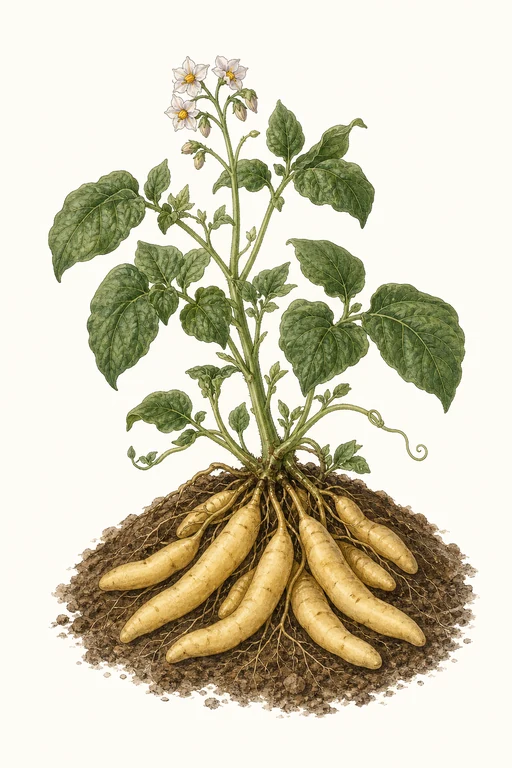
Creamy and luminous, Russian Banana fingerlings unfurl from the soil in buttery, oblong “bananas” with a smooth, thin skin and a tender, fine-grained bite. Their flavor is rich yet delicate—ideal for showcasing in simple, high-heat preparations where their shape stays elegant and their interiors turn velvety. Grow them for roasting trays, pan-searing, and standout side dishes, or for mashing into silky sauces with a gentle, potato-sweet depth.
Crop Dates
| Milestone | Date |
|---|---|
| Climate | Frost-Free Climate |
| Growing Approach | Continuous Production |
Crop Details
| Trait | Value |
|---|---|
| Days to Maturity | 80 |
| Sun Requirements | Full Sun |
| Growth Habit | Spreading |
| Support Needed | None |
| Planting Depth | Normal |
| Germination Temp (°F) | 55 |
| Min Soil Temp (°F) | 45 |
| Min Night Temp (°F) | 35 |
| Harden Off (days) | Not Required |

Frequently Asked Questions
What pest or disease is most likely on Solanum tuberosum (potato) and how do I control it at home?
How often should I water Russian Banana potatoes during the main growing phase?
Creamy and luminous, Russian Banana fingerlings unfurl from the soil in buttery, oblong “bananas” with a smooth, thin skin and a tender, fine-grained bite. Their flavor is rich yet delicate—ideal for showcasing in simple, high-heat preparations where their shape stays elegant and their interiors turn velvety. Grow them for roasting trays, pan-searing, and standout side dishes, or for mashing into silky sauces with a gentle, potato-sweet depth.
Sowing Tips

Soil Temperature
Direct sow or transplant when soil at planting depth holds 45°F for reliable germination and early growth.
Expert Note

Plant certified seed potatoes (or properly cured cut tubers) 2–3 in deep when soil is cool and handle sprouting tubers gently to protect eyes.