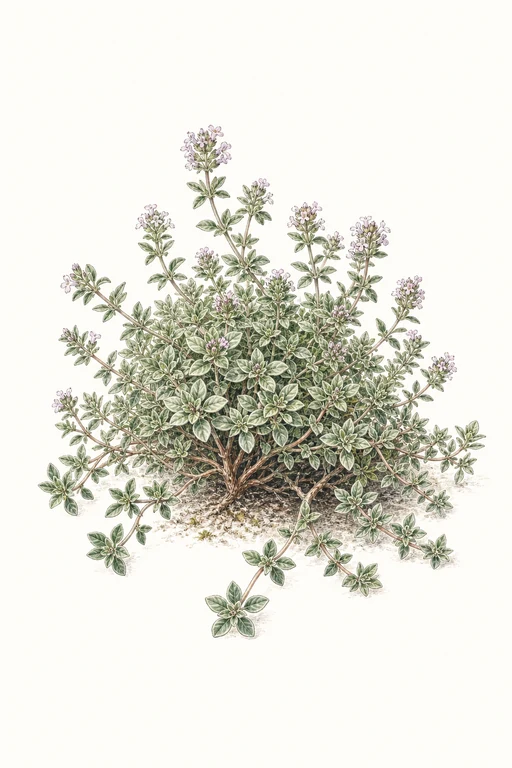
Silver Queen Thyme
Thyme
🌱 60d to harvest
Upright
Fragrant, silvery foliage drifts with a cool, herbal perfume—Silver Queen Thyme forms a dense, low cushion of leaves that feel fi…
Crop Dates
| Milestone | Date |
|---|---|
| Start Indoors | Dec 4th |
| Last Frost | Jan 1st |
| Transplant / Sow Outdoors | Feb 12th |
| Harvest Begins | Apr 13th |
| Harvest Ends | Dec 31st |
Crop Details
| Trait | Value |
|---|---|
| Days to Maturity | 60 |
| Sun Requirements | Full Sun |
| Growth Habit | Upright |
| Support Needed | None |
| Planting Depth | Normal |
| Germination Temp (°F) | 70 |
| Min Soil Temp (°F) | 60 |
| Min Night Temp (°F) | 50 |
| Harden Off (days) | 10 |
Recommended Companions
Frequently Asked Questions
What pest or disease problem commonly affects Thymus vulgaris (English thyme), and what’s the best home fix?
Thymus vulgaris is especially prone to root rot and stem dieback when soil stays damp—often showing as blackened stems at the base and wilting despite watering. Water only when the top 1–2 in (2–5 cm) of soil is dry, keep plants in full sun, and improve drainage with gritty soil or raised beds. If you see browned stems, remove affected shoots and avoid overhead watering; in severe cases, replant in fresh, drier soil to break the disease cycle.
How often should I water Silver Queen thyme during peak growth, and what soil moisture level should I aim for?
During the main growing phase, water deeply only when the top 1–2 in (2–5 cm) of soil has dried out. Aim for consistently “dry to lightly moist” soil—thyme prefers a near-drought cycle and will sulk or rot in persistently wet ground. In containers, check moisture more often and use a fast-draining potting mix so excess water never sits in the bottom saucer.
When is Silver Queen thyme ready to harvest, and what signs should I look for?
Harvest when plants reach about 60 days from sowing and have formed vigorous growth with many healthy leaves along the stems. For best flavor, take sprigs just before the plant flowers (or immediately as buds begin to form), and snip no more than one-third of the total growth at a time to keep the plant productive. After harvest, pinch back lightly if needed so new shoots fill in before the next growth wave.