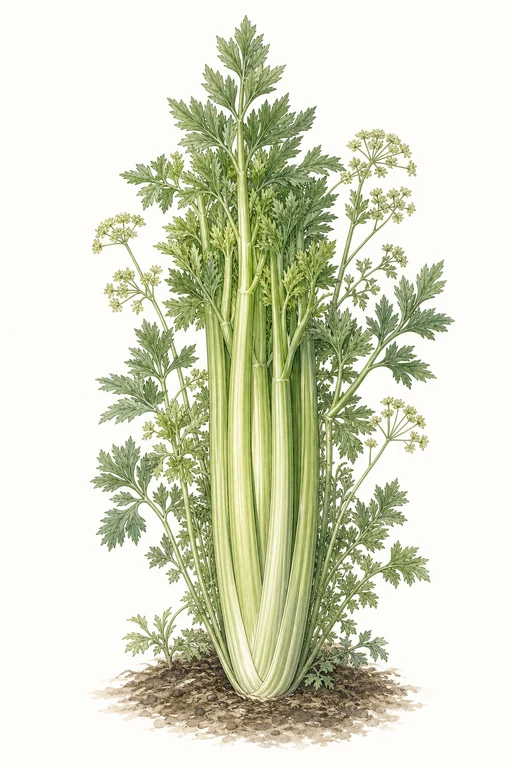
Utah 52-70
Celery
🌱 90d to harvest
Upright
Crisp, cool stalks with a clean, bright snap—Utah 52-70 delivers a refreshing celery flavor that tastes distinctly “garden-fresh”…
Crop Dates
| Milestone | Date |
|---|---|
| Start Indoors | Oct 23rd |
| Last Frost | Jan 1st |
| Transplant / Sow Outdoors | Dec 25th |
| Harvest Begins | Mar 25th |
| Harvest Ends | Dec 31st |
Crop Details
| Trait | Value |
|---|---|
| Days to Maturity | 90 |
| Sun Requirements | Part Sun |
| Growth Habit | Upright |
| Support Needed | None |
| Planting Depth | Normal |
| Germination Temp (°F) | 70 |
| Min Soil Temp (°F) | 45 |
| Min Night Temp (°F) | 40 |
| Harden Off (days) | 7 |
Recommended Companions
Frequently Asked Questions
What pest or disease most commonly affects Apium graveolens (celery), and what should I do?
Celery commonly suffers from early blight/leaf spot and bacterial leaf blight, which show up as dark, water-soaked leaf spots that spread in humid weather. Remove and destroy infected leaves, water at the soil line (not over the foliage), and improve airflow by spacing plants as directed to reduce leaf wetness. If disease persists, apply a labeled copper-based fungicide/bactericide per label directions and avoid harvesting from treated plants until the label’s re-entry/harvest interval.
How often should I water Apium graveolens during the main growing phase, and what soil moisture level should I keep?
During the main growth period, keep the root zone consistently moist—aim for evenly damp soil with no drying out between waterings. In most home gardens this means deep watering about 2–3 times per week, then adjusting to weather so the top 1 inch of soil doesn’t dry. Mulch around plants helps stabilize moisture and supports steady growth of celery petioles.
How can I tell when Apium graveolens is ready to harvest?
Harvest when stalks are firm and reach the typical mature thickness for your planting (often around golf-ball to thumb-size, depending on spacing), usually about 90 days after sowing/transplanting. Pull-test one plant: if the base is tight and the stalks blanch well (if you blanch by covering stems), it’s ready. For peak flavor and crisp texture, harvest in cooler weather and avoid waiting until stalks look loose or overly tall and hollow.