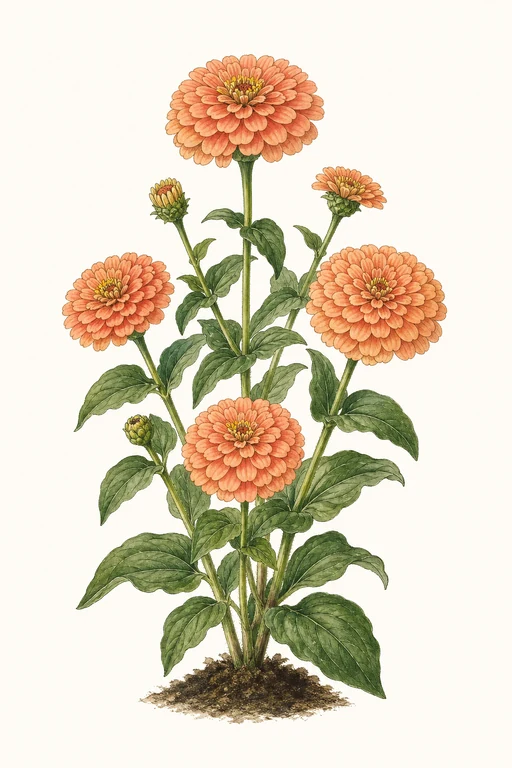
Zinderella Peach
70d to harvest
Sunlit petals unfurl in a riot of warm peachy glow, with a velvety softness that feels almost painterly at arm’s length. Zinderella Peach forms sturdy, well-branched stems topped with abundant, long-lasting blooms—ideal for creating airy bouquets and vivid color accents that hold their charm from garden to vase.
Crop Dates
Growing note: In frost-free Zone 10b, grow this cool-season crop during the cooler dry season (October–February).
| Milestone | Date |
|---|---|
| Start Indoors | — |
| Climate | Frost-Free Climate |
| Transplant / Sow Outdoors | Oct 1st |
| Harvest Begins | Dec 10th |
| Harvest Ends | Feb 28th |
Crop Details
| Trait | Value |
|---|---|
| Days to Maturity | 70 |
| Sun Requirements | Full Sun |
| Growth Habit | Upright |
| Support Needed | None |
| Planting Depth | Normal |
| Germination Temp (°F) | 75 |
| Min Soil Temp (°F) | 60 |
| Min Night Temp (°F) | 50 |
| Harden Off (days) | 7 |
Recommended Companions
Frequently Asked Questions
What pest or disease most often affects Zinnia elegans (Zinderella Peach), and how can I manage it?
Zinnia elegans is especially prone to powdery mildew, which shows up as a white, dusty coating on leaves and spreads when plants stay too damp or crowded. Space plants with airflow, water at soil level, and remove heavily affected leaves early. If mildew appears repeatedly, use a labeled fungicide for powdery mildew on ornamentals and repeat according to the label.
How often should I water Zinnia elegans during the main growing phase?
During the main growth and blooming period, keep the soil evenly moist but not soggy—aim for watering when the top 1 inch of soil feels dry. Water deeply at the base so moisture reaches the root zone, then let the surface dry before the next watering. Avoid frequent light sprinkles that keep foliage wet, which increases mildew risk.