
Adirondack Red
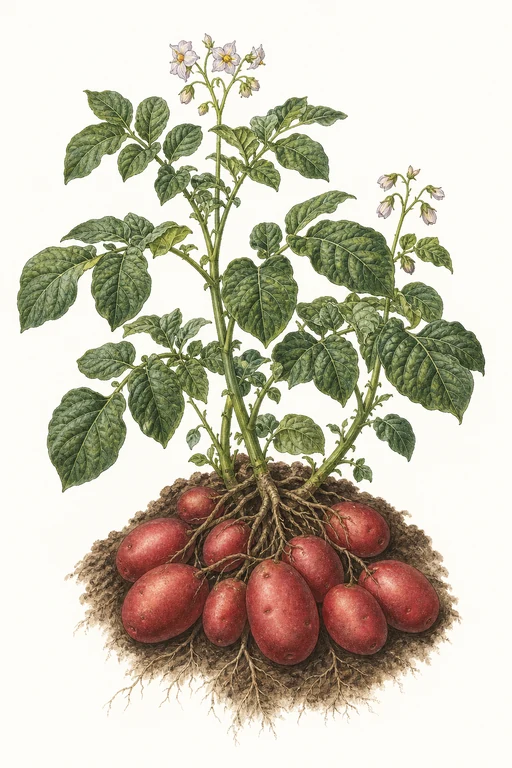
Velvety-skinned and richly colored, Adirondack Red brings a dramatic blush to the garden—russet-red exteriors with a smooth, slightly waxy sheen and creamy, pale flesh beneath. Its texture is satisfyingly firm yet tender when cooked, making it a standout specialty potato for roasting, mashing, and hearty skillet preparations, as well as for golden-brown wedges and rustic sides. Grow Adirondack Red for a dependable 90-day harvest and the kind of color that turns every basket into a centerpiece.
Crop Dates
| Milestone | Date |
|---|---|
| Climate | Frost-Free Climate |
| Growing Approach | Continuous Production |
Crop Details
| Trait | Value |
|---|---|
| Days to Maturity | 90 |
| Sun Requirements | Full Sun |
| Growth Habit | Upright |
| Support Needed | None |
| Planting Depth | Normal |
| Germination Temp (°F) | 50 |
| Min Soil Temp (°F) | 45 |
| Min Night Temp (°F) | 35 |
| Harden Off (days) | Not Required |


Frequently Asked Questions
What pest or disease problem commonly affects Solanum tuberosum (potatoes) like Adirondack Red, and how do I manage it?
How often should I water Solanum tuberosum during the main growing phase, and what soil moisture level should I aim for?
Velvety-skinned and richly colored, Adirondack Red brings a dramatic blush to the garden—russet-red exteriors with a smooth, slightly waxy sheen and creamy, pale flesh beneath. Its texture is satisfyingly firm yet tender when cooked, making it a standout specialty potato for roasting, mashing, and hearty skillet preparations, as well as for golden-brown wedges and rustic sides. Grow Adirondack Red for a dependable 90-day harvest and the kind of color that turns every basket into a centerpiece.
Sowing Tips

Soil Temperature
Direct sow or transplant when soil at planting depth holds 45°F for reliable germination and early growth.
Expert Note

Plant certified seed potatoes in loose, well-drained soil and hill as plants grow to keep tubers covered for best color and yields.