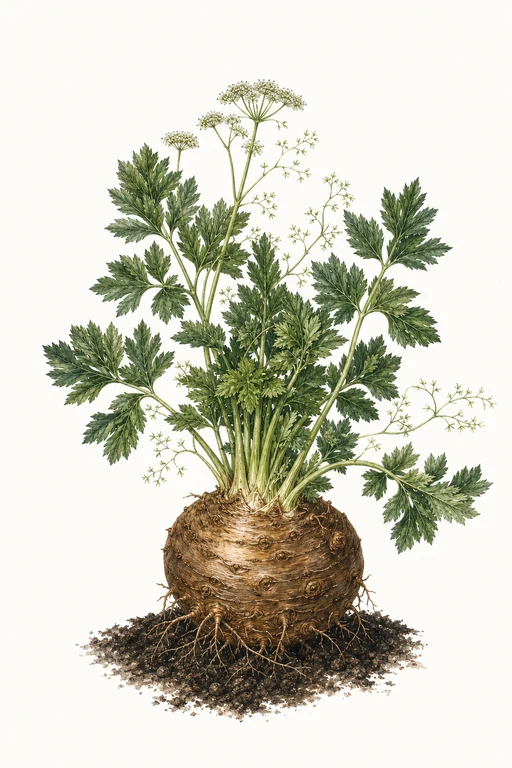
Darklet
120d to harvest
Sink your spoon into Darklet’s dense, creamy heart—its flavor is richly nutty with a cool, celery-green brightness and a whisper of sweetness. At maturity, this celeriac forms a broad, knobby crown with smooth, tight flesh that stays pleasantly firm, making it a standout for roasting, puréeing, and velvety sauces. Grow Darklet for a dependable, long-season harvest that rewards patience with a beautifully textured, spoon-ready root.
Crop Dates
Growing note: Frost-free Zone 11a supports continuous outdoor production.
| Milestone | Date |
|---|---|
| Climate | Frost-Free Climate |
| Growing Approach | Continuous Production |
Crop Details
| Trait | Value |
|---|---|
| Days to Maturity | 120 |
| Sun Requirements | Part Sun |
| Growth Habit | Upright |
| Support Needed | None |
| Planting Depth | Normal |
| Germination Temp (°F) | 70 |
| Min Soil Temp (°F) | 40 |
| Min Night Temp (°F) | 35 |
| Harden Off (days) | 6 |
Recommended Companions
Frequently Asked Questions
How often should I water celeriac during the main growing phase, and what soil moisture level should I maintain?
From when seedlings establish until the bulb/hip starts swelling, keep soil consistently moist but not soggy—aim for the top 1–2 inches to stay evenly damp. In typical home gardens this often means watering about 1–2 times per week, increasing frequency during hot spells, while using enough water to wet the root zone. Avoid letting the soil fully dry out, because irregular moisture can lead to misshapen celeriac and poorer texture.
How can I tell when celeriac (Apium graveolens var. rapaceum) is ready to harvest?
Harvest at about 120 days from sowing/transplanting, or when the celeriac “bulb” reaches a firm, full size with a smooth, well-formed surface. The leaves should look strong and mostly intact; if frost hits, you can harvest right after the first light freezes for best flavor and tenderness. Use a spade to lift carefully and trim roots/leaves promptly to prevent drying.