SproutSmart
SproutSmart Intelligent Garden Sowing

English Thyme

Thyme

Planting Schedule

Add English Thyme to your garden to build a schedule and get reminders.
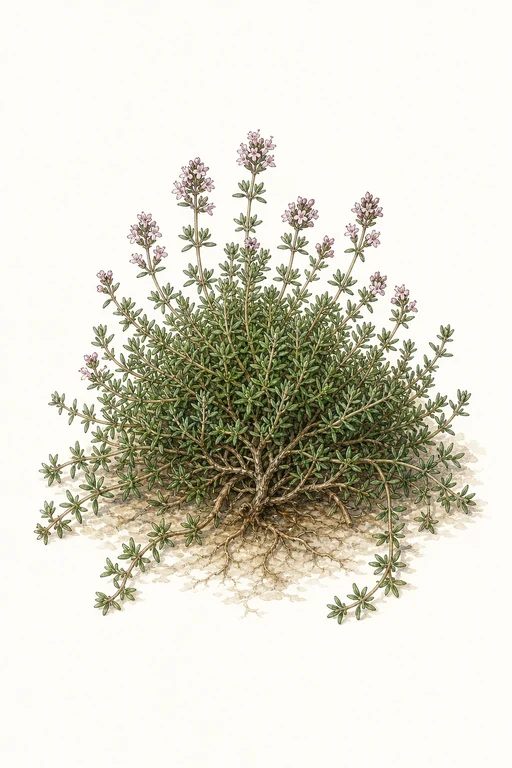
Botanical illustration of English Thyme
730d to harvest

Fragrant to the first touch, English Thyme fills the garden with a warm, herbal perfume—sweetly resinous and gently peppery. Its tiny, narrow leaves form a dense, evergreen mat with a crisp, aromatic texture that holds its character in dried bundles and in everyday flavoring blends. Grow English Thyme for reliable, long-season performance and a steady supply of intensely scented foliage for seasoning, sachets, and aromatic infusions.

Crop Dates

Growing note: In frost-free Zone 11a, grow this cool-season crop during the cooler dry season (October–February).
MilestoneDate
Start Indoors
ClimateFrost-Free Climate
Transplant / Sow OutdoorsOct 1st
Harvest BeginsFeb 28th
Harvest EndsFeb 28th

Crop Details

TraitValue
Days to Maturity730
Sun RequirementsFull SunFull sun
Growth HabitUpright
Support NeededNone
Planting DepthNormal
Germination Temp (°F)70
Min Soil Temp (°F)50
Min Night Temp (°F)45
Harden Off (days)7

Frequently Asked Questions


What pest or disease most often affects English thyme (Thymus vulgaris), and how can I prevent it?
English thyme commonly suffers from root rot and stem dieback caused by overly wet, poorly drained soil or lingering leaf moisture. Plant thyme in gritty, fast-draining soil, water only at the base, and improve drainage (raised bed or amended mix) if plants look wilted in spite of damp soil. If you see blackened stems or a collapsing base, remove affected plants and let the bed dry before replanting.
How much should I water English thyme during the main growing phase?
During active growth, water English thyme deeply only when the top 1–2 inches of soil are dry, then let excess drain completely. In-ground thyme usually needs far less water than many herbs—aim for about every 7–14 days depending on heat, with longer gaps in cool or rainy weather. Avoid frequent light watering, which keeps the root zone wet and increases rot risk.
Botanical illustration of English Thyme

Fragrant to the first touch, English Thyme fills the garden with a warm, herbal perfume—sweetly resinous and gently peppery. Its tiny, narrow leaves form a dense, evergreen mat with a crisp, aromatic texture that holds its character in dried bundles and in everyday flavoring blends. Grow English Thyme for reliable, long-season performance and a steady supply of intensely scented foliage for seasoning, sachets, and aromatic infusions.