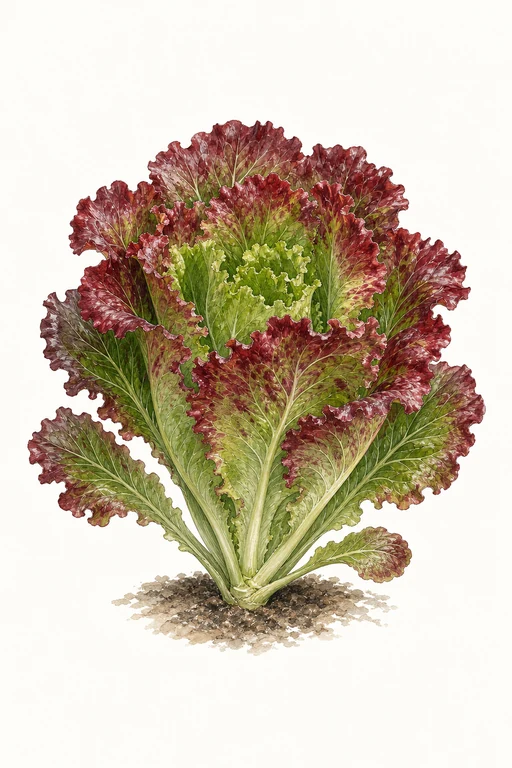
Ruby Red
55d to harvest
Ruby Red brings a jewel-bright splash to the garden—crisp leaves edged in deep ruby and blushed with warm garnet over a cool green base. At maturity (about 55 days), the Batavian heads form sturdy, upright rosettes with a satisfyingly crunchy bite and tender, sweet-green flavor. Ideal for fresh salads and vibrant garnishes, Ruby Red also shines when you want color-forward greens for quick tosses and bold, leafy bowls.
Crop Dates
Growing note: In frost-free Zone 11a, grow this cool-season crop during the cooler dry season (October–February).
| Milestone | Date |
|---|---|
| Start Indoors | — |
| Climate | Frost-Free Climate |
| Transplant / Sow Outdoors | Oct 1st |
| Harvest Begins | Nov 25th |
| Harvest Ends | Feb 28th |
Crop Details
| Trait | Value |
|---|---|
| Days to Maturity | 55 |
| Sun Requirements | Part Sun |
| Growth Habit | Rosette |
| Support Needed | None |
| Planting Depth | Surface |
| Germination Temp (°F) | 70 |
| Min Soil Temp (°F) | 40 |
| Min Night Temp (°F) | 35 |
| Harden Off (days) | 6 |
Recommended Companions
Frequently Asked Questions
What pests or diseases commonly affect Swiss chard (Beta vulgaris var. cicla) and how can I control them?
Swiss chard is especially prone to leaf spot and downy mildew in cool, humid weather; remove any infected leaves immediately and avoid wetting foliage when you water. Aphids and leaf miner flies are also frequent—blast aphids off with a strong stream of water and use insecticidal soap if they persist, and remove heavily mined leaves to slow the leaf miner’s spread.
How often should I water Swiss chard during the main growing phase?
During active leaf production, keep soil consistently evenly moist but not waterlogged—aim for about 1 inch (2.5 cm) of water per week, adjusted for rainfall and heat. In part-sun beds, check the top 1–2 inches of soil; water when that layer feels dry to the touch to prevent tough, bitter leaves and bolting.
How do I know when Ruby Red Swiss chard is ready to harvest?
Harvest when leaves are large enough for your use, typically around 50–60 days after sowing, with individual outer leaves about 6–10 inches long. Pick outer leaves first and leave the center growing point intact; regular harvesting keeps plants producing tender leaves and reduces the chance of bolting.