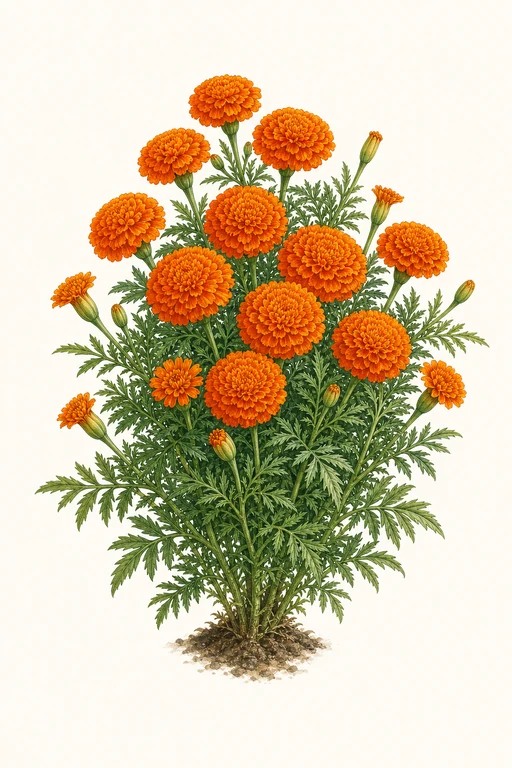
Fireball
Marigold
🌱 50d to harvest
Upright
A blaze of warm, ember-bright color—Fireball French marigold blooms with densely layered, pom-pom flowers that seem to glow in th…
Crop Dates
| Milestone | Date |
|---|---|
| Start Indoors | Direct Sow |
| Last Frost | Jan 1st |
| Transplant / Sow Outdoors | Jan 1st |
| Harvest Begins | Feb 20th |
| Harvest Ends | Dec 31st |
Crop Details
| Trait | Value |
|---|---|
| Days to Maturity | 50 |
| Sun Requirements | Full Sun |
| Growth Habit | Upright |
| Support Needed | None |
| Planting Depth | Surface |
| Germination Temp (°F) | 70 |
| Min Soil Temp (°F) | 60 |
| Min Night Temp (°F) | 50 |
| Harden Off (days) | 5 |
Recommended Companions
Frequently Asked Questions
What pest or disease is most likely on Tagetes patula (Fireball), and how can I control it?
Watch for aphids and spider mites, which commonly build up on Tagetes patula in warm weather and cause curled, stippled leaves. Rinse plants with a strong spray of water, then apply insecticidal soap (especially under leaves) and repeat every 5–7 days until new growth is free of pests. If you see leaf spots or a gray, fuzzy mold, remove affected leaves and improve airflow; avoid overhead watering to reduce foliar disease.
How often should I water Fireball Tagetes during the main growing phase?
Keep Tagetes patula evenly moist while it’s establishing, then water when the top 1 inch of soil feels dry. In full sun during active bloom, this typically means deep watering about 2–3 times per week, depending on heat and container vs. ground. Never let soil stay soggy, because wet soil conditions increase the risk of rot and foliar disease.
How do I know when Fireball Tagetes (Tagetes patula) is ready to harvest?
For cut flowers, harvest when the flower heads are fully open and the petals are at their richest color—usually about 50 days from sowing to maturity. Deadhead spent blooms promptly by snipping at the base of the flower stem to encourage fresh buds. If you’re harvesting for seed, leave a few blooms on the plant until the seed heads turn brown and dry, then collect them once they sound/feel dry and brittle.