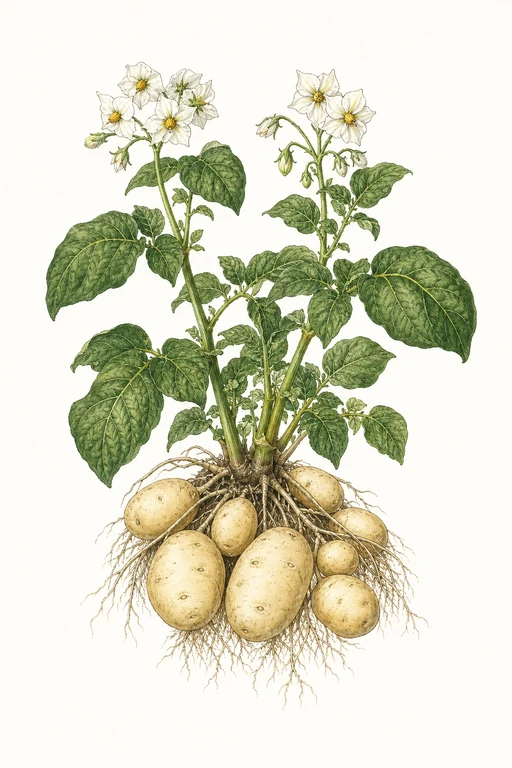
Kennebec
90d to harvest
Creamy, buttery flesh with a clean, mellow flavor—Kennebec white potatoes deliver a satisfying bite and dependable texture you’ll want to grow again and again. At harvest, the tubers form with smooth, light skin and an appealing oval shape, holding their integrity for hearty, golden results and comforting classics. A favorite for home cellars and everyday favorites, Kennebec shines wherever you want reliable performance from planting to 90-day maturity.
Crop Dates
Growing note: Frost-free Zone 12a supports continuous outdoor production.
| Milestone | Date |
|---|---|
| Climate | Frost-Free Climate |
| Growing Approach | Continuous Production |
Crop Details
| Trait | Value |
|---|---|
| Days to Maturity | 90 |
| Sun Requirements | Full Sun |
| Growth Habit | Mounding |
| Support Needed | None |
| Planting Depth | Normal |
| Germination Temp (°F) | 50 |
| Min Soil Temp (°F) | 45 |
| Min Night Temp (°F) | 28 |
| Harden Off (days) | Not Required |
Recommended Companions
Frequently Asked Questions
What pest or disease is most likely to hit Solanum tuberosum (potato) and how can I manage it at home?
Early blight (Alternaria) is a common home-garden problem, showing up as dark, target-like spots on older potato leaves. Remove and destroy affected foliage early, improve airflow by keeping plants appropriately hilled, and rotate away from potatoes/other Solanaceae in future seasons. If wet weather persists, use a labeled fungicide appropriate for potatoes and follow the label’s reapplication interval.
How often should I water Solanum tuberosum during the main growing phase to keep tubers forming well?
During active tuber bulking (roughly mid-season), keep the soil evenly moist—about 1–2 inches of water per week total, adjusted for rainfall. Water deeply so moisture reaches the hilled root zone, and avoid letting soil dry out completely between waterings. Inconsistent moisture can lead to misshapen tubers, so aim for steady conditions rather than frequent light sprinkling.