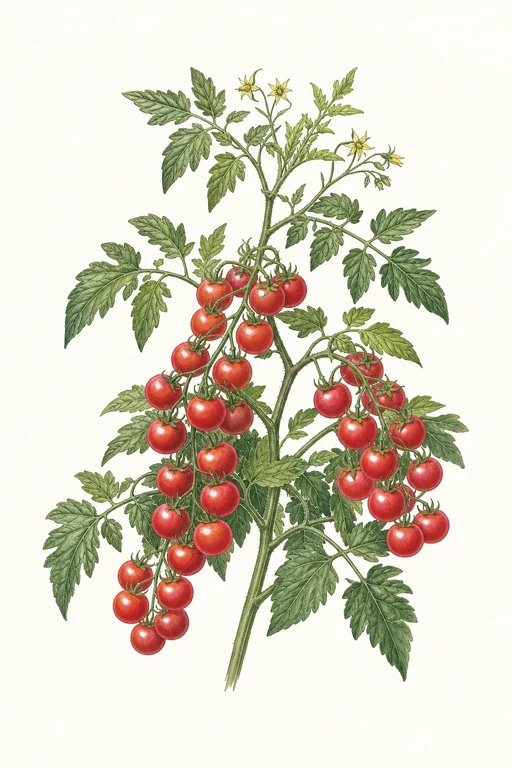
Rosella Cherry
60d to harvest
Sweet as a sun-warmed berry, Rosella Cherry tomatoes burst with a glossy, jewel-red flavor that feels bright and juicy from the first bite. The fruits are small and round with a smooth, taut skin and a tender, succulent interior—ideal for snacking straight from the vine and for adding vivid color to fresh salads, vibrant sauces, and quick pickling batches. With about 60 days to maturity, this compact grower delivers a steady harvest of high-impact, hand-sized tomatoes that look as good as they taste.
Crop Dates
Growing note: Frost-free Zone 12a supports continuous outdoor production.
| Milestone | Date |
|---|---|
| Climate | Frost-Free Climate |
| Growing Approach | Continuous Production |
Crop Details
| Trait | Value |
|---|---|
| Days to Maturity | 60 |
| Sun Requirements | Full Sun |
| Growth Habit | Indeterminate |
| Support Needed | Cage |
| Planting Depth | Deep |
| Germination Temp (°F) | 75 |
| Min Soil Temp (°F) | 60 |
| Min Night Temp (°F) | 50 |
| Harden Off (days) | 9 |
Recommended Companions
Frequently Asked Questions
What’s the most likely pest or disease for Solanum lycopersicum (cherry tomato type) like Rosella Cherry, and how do I control it?
Blossom-end rot and fungal leaf issues (often starting as early blight on Solanaceae) are common, especially when soil moisture swings. Water consistently and mulch to keep the root zone even; remove and destroy heavily spotted lower leaves and use an appropriate labeled fungicide if spots spread. If the problem is blossom-end rot, check for irregular watering and avoid high nitrogen—too much leaf growth can worsen the calcium-related deficiency in tomato fruits.
How often should I water Rosella Cherry during its main growing phase (from flowering through fruiting)?
During flowering and fruiting, keep the soil evenly moist—about 1–2 inches (2.5–5 cm) of water per week total, adjusting for heat and container size. Water deeply 1–2 times per week rather than lightly daily, and stop waterlogging by ensuring good drainage. Let the top 1 inch (2–3 cm) of soil dry slightly between waterings to prevent stress that can trigger cracking and blossom-end rot.