
Blue Solaise
Leek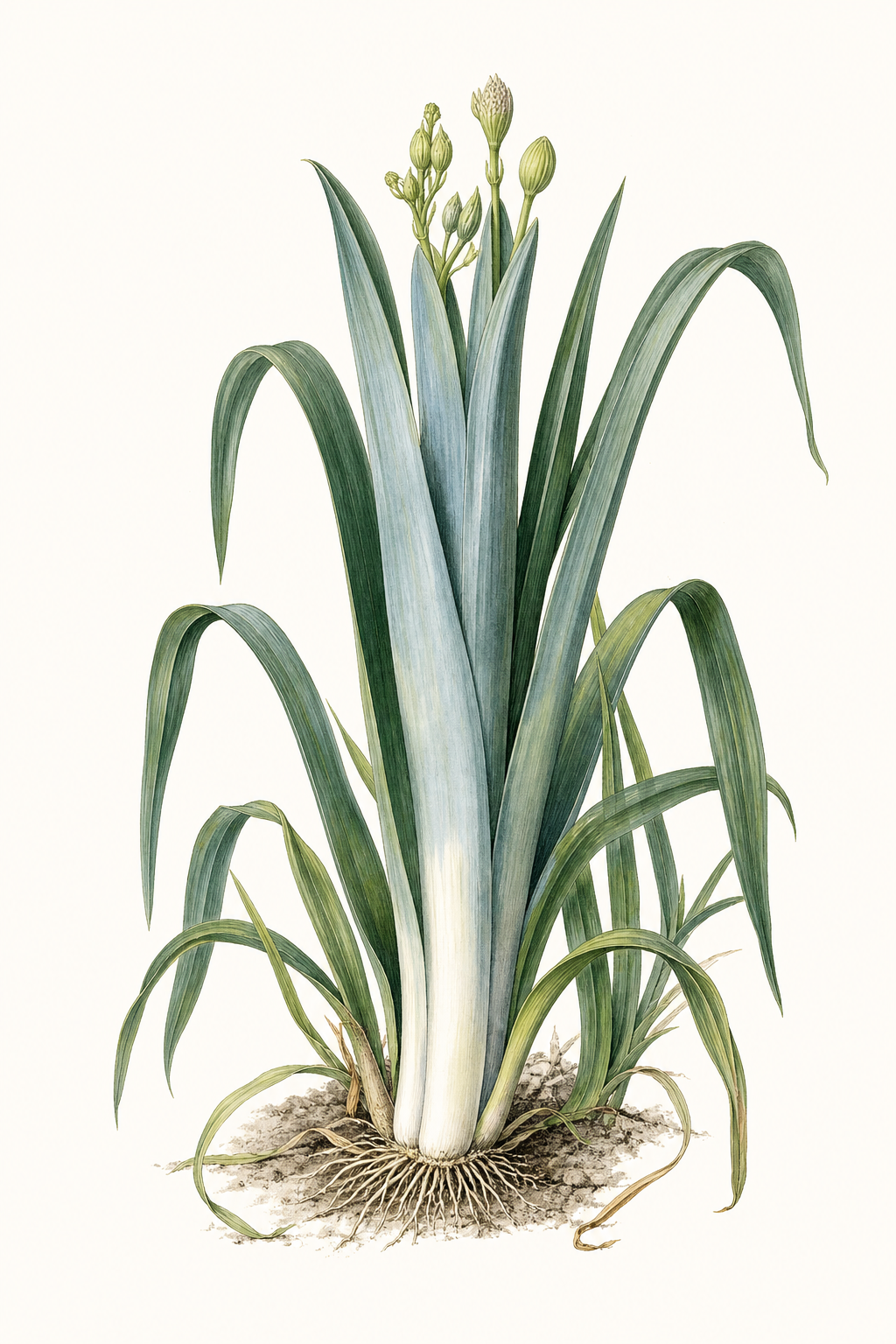
Cool and captivating, Blue Solaise leeks bring a silken, ocean-deep flavor with a gentle sweetness that lingers—each stalk is ten…
Crop Dates
| Milestone | Date |
|---|---|
| Start Indoors | Oct 23rd |
| Last Frost | Jan 1st |
| Transplant / Sow Outdoors | Dec 25th |
| Harvest Begins | Apr 14th |
| Harvest Ends | Dec 31st |
Crop Details
| Trait | Value |
|---|---|
| Days to Maturity | 110 |
| Sun Requirements | Full Sun |
| Growth Habit | Upright |
| Support Needed | None |
| Planting Depth | Normal |
| Germination Temp (°F) | 70 |
| Min Soil Temp (°F) | 45 |
| Min Night Temp (°F) | 28 |
| Harden Off (days) | 7 |
Recommended Companions
Frequently Asked Questions
How do I prevent and treat powdery mildew on Blue Solaise plants?
How often should I water Blue Solaise during the main growing phase?
When is Blue Solaise ready to harvest?
Cool and captivating, Blue Solaise leeks bring a silken, ocean-deep flavor with a gentle sweetness that lingers—each stalk is tender and richly textured, with a firm, crisp bite. At maturity, the long, upright shafts form a clean, well-blanched look that’s ideal for roasting, simmering, and velvety sauces, as well as pickling for a bright, briny accent. Grow 110 days for a steady harvest of elegant, blue-green stems that turn the garden into a palette of slate and steel.
Sowing Tips

Transplant Conditions
Wait until soil reaches 45°F and nights stay above 28°F before moving outdoors. Harden off for 7 days first.
Expert Note

For the sweetest, most tender white portion, transplant at the right time and keep hilling/adding soil around the stems as they grow.