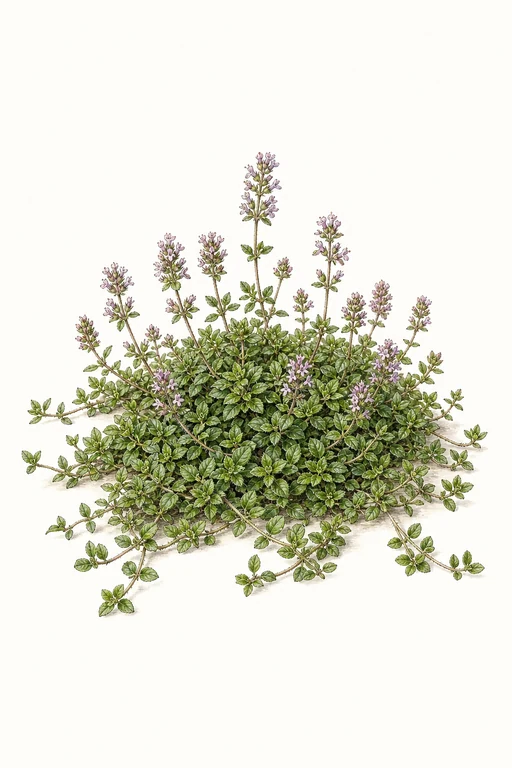
Elfin Creeping Thyme
Thyme
🌱 70d to harvest
Spreading
Fragrant, tiny leaves unfurl into a low, spreading carpet of Elfin Creeping Thyme, releasing a vivid, herbal perfume with every s…
Crop Dates
| Milestone | Date |
|---|---|
| Start Indoors | Direct Sow |
| Last Frost | Jan 1st |
| Transplant / Sow Outdoors | Jan 1st |
| Harvest Begins | Mar 12th |
| Harvest Ends | Dec 31st |
Crop Details
| Trait | Value |
|---|---|
| Days to Maturity | 70 |
| Sun Requirements | Full Sun |
| Growth Habit | Spreading |
| Support Needed | None |
| Planting Depth | Surface |
| Germination Temp (°F) | 65 |
| Min Soil Temp (°F) | 50 |
| Min Night Temp (°F) | 35 |
| Harden Off (days) | 7 |
Recommended Companions
Frequently Asked Questions
What pest or disease problem is most common on Thymus serpyllum (elfin creeping thyme) and how do I fix it?
The most common issue is fungal root or stem rot caused by persistently wet soil, often showing up as sudden wilting, blackened bases, or patchy dieback. Improve drainage immediately—avoid overhead watering, water only at the base, and let the soil dry slightly between waterings; if a section is collapsing, lift and remove the worst plants to protect the surrounding mat. In humid conditions, also thin/cut back only lighty to improve airflow and keep the ground covered but not soggy.
How often should I water elfin creeping thyme during its main growing phase?
During active growth (spring through summer), water deeply just to settle moisture around the root zone, then allow the top 1–2 inches of soil to dry before watering again. In full sun, expect roughly every 7–14 days depending on heat and rainfall; less in cooler or rainy weeks, more only during prolonged drought. Overwatering is the main cause of failure with Thymus serpyllum—keep soil on the dry side rather than consistently damp.
How can I tell when elfin creeping thyme is ready to harvest?
Harvest once plants are well established (about 60–70 days after sowing) and have abundant small leaves along the trailing stems. You’ll know it’s ready when new growth is sturdy and aromatic and the stems are actively flowering or just about to flower—snip small sprigs in the morning for the best flavor. For repeated harvests, cut lightly so the plant can regrow from the lower leafy sections without exposing bare stems.