Dakota Tears
Onion
🌱 100d to harvest
Bulbing
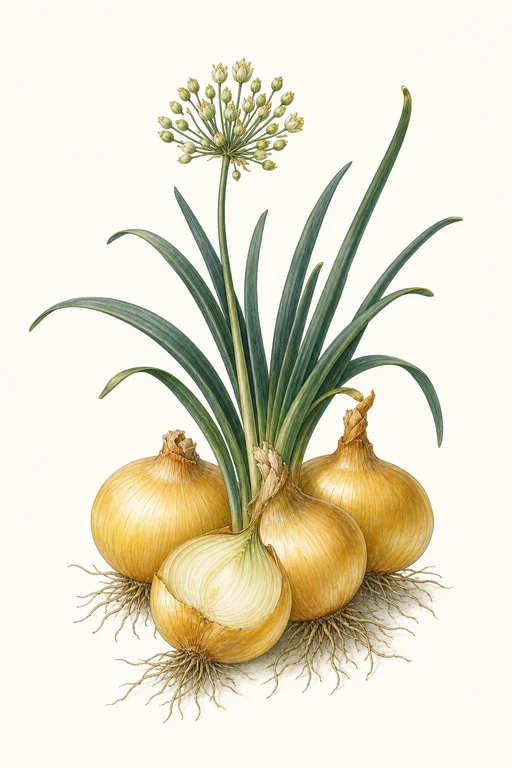
Golden globes with a luminous, sunlit sheen—Dakota Tears onions sweeten as they mature, offering a gentle bite and a juicy, crisp…
Crop Dates
| Milestone | Date |
|---|---|
| Start Indoors | Direct Sow |
| Last Frost | Jan 1st |
| Transplant / Sow Outdoors | Dec 25th |
| Harvest Begins | Apr 4th |
| Harvest Ends | — |
Crop Details
| Trait | Value |
|---|---|
| Days to Maturity | 100 |
| Sun Requirements | Full Sun |
| Growth Habit | Bulbing |
| Support Needed | None |
| Planting Depth | Normal |
| Germination Temp (°F) | 70 |
| Min Soil Temp (°F) | 45 |
| Min Night Temp (°F) | 28 |
| Harden Off (days) | 7 |
Recommended Companions
Frequently Asked Questions
What pest or disease problem is most common for Allium cepa (Dakota Tears) onions, and how can I prevent or treat it?
Onion downy mildew (caused by Peronospora destructor) shows up as gray-purple fuzzy growth on leaves and yellowing that progresses quickly in cool, humid weather. Improve airflow and avoid overhead watering, then remove and destroy infected leaves early to slow spread. If you’re seeing active mildew after long leaf wetness periods, treat promptly with a labeled fungicide that targets downy mildew on onions, following the label exactly.
How often should I water Allium cepa during the main growing phase?
During active leaf growth, keep the soil consistently moist but not soggy—aim for about 1 inch of water per week, split into 2–3 waterings if it doesn’t rain. When bulbs start to swell (typically mid-season), reduce frequency so the soil dries slightly between waterings; this helps bulbs mature and lowers rot risk. Use a finger test: the top 1–2 inches should feel evenly moist, not wet or waterlogged.
How do I tell when Dakota Tears onions are ready to harvest?
Harvest when about 50–75% of the leaves have naturally fallen over and the remaining leaves are yellowing, not still actively green and upright. Gently lift one bulb to check: the bulb should have a firm, well-developed skin with outer layers papery. Stop watering about 1–2 weeks before harvest to help skins dry, then cure in a warm, airy place for 2–3 weeks before storage.