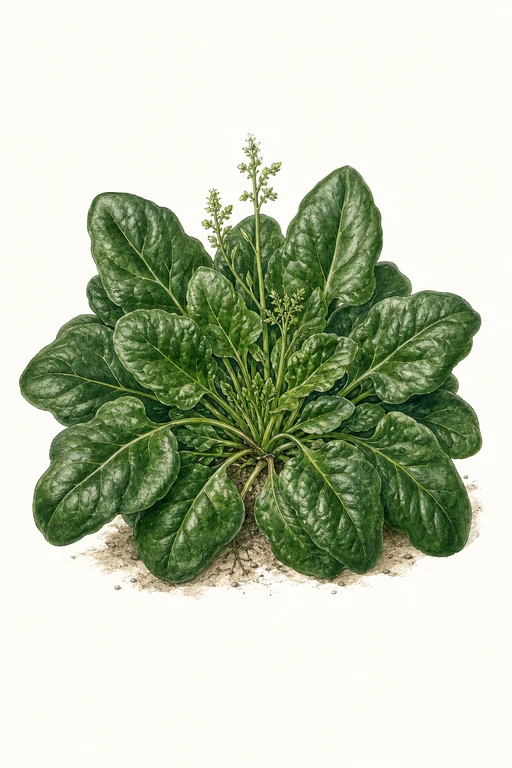
F1 Spinach
Spinach
🌱 40d to harvest
Rosette
Unfurl tender, flat leaves with a lush, velvety sheen and a fresh, spinach-sweet flavor that feels vibrant straight from the gard…
Crop Dates
| Milestone | Date |
|---|---|
| Start Indoors | Direct Sow |
| Last Frost | Jan 1st |
| Transplant / Sow Outdoors | Jan 1st |
| Harvest Begins | Feb 10th |
| Harvest Ends | — |
Crop Details
| Trait | Value |
|---|---|
| Days to Maturity | 40 |
| Sun Requirements | Part Sun |
| Growth Habit | Rosette |
| Support Needed | None |
| Planting Depth | Normal |
| Germination Temp (°F) | 45 |
| Min Soil Temp (°F) | 40 |
| Min Night Temp (°F) | 30 |
| Harden Off (days) | Not Required |
Recommended Companions
Frequently Asked Questions
What pest or disease most commonly affects Spinacia oleracea (F1 spinach), and how can I treat it at home?
Spinach commonly suffers from downy mildew (often favored by cool, damp weather), showing yellow patches on leaves with a gray-purple growth on the underside. Remove and discard infected leaves right away, improve airflow, and avoid wetting foliage when watering. If you’re seeing active mildew, switch to a preventive protectant labeled for spinach (follow the label rate and reapply as directed).
How often should I water F1 spinach (Spinacia oleracea) during active growth to keep soil moisture right?
During the main growing phase, keep the top 1 inch of soil consistently evenly moist—spinach roots dry out quickly and stress can reduce leaf size. In typical cool weather, this is often about 1–2 times per week, but water whenever the soil surface begins to dry, then water thoroughly. Avoid soggy beds; good drainage is important to reduce mildew risk.
How do I tell when F1 spinach (Spinacia oleracea) is ready to harvest?
Harvest when leaves are tender and fully expanded but before they start getting tough or forming a strong central stem. For most F1 spinach, this is around 40 days from sowing (varies by temperature), and you can start picking at the first healthy leaf clusters rather than waiting for maturity of the whole row. Use scissors to cut the outer leaves or the whole plant, leaving the crown if you want potential for regrowth (when bolting hasn’t started).